SPINR
SPINR is a low-code, superfast, cloud-based, integration platform, providing real-time data and insight to any organisation. It helps businesses leverage their existing legacy data silos to create unified data views across their estate.

Type
Public Sector, Private Sector
Tools
Sketching, Figma, Visual Studio Code, Principle
Duration
8 months
Deliverables
Product Design, Front End, Branding
Challenge
The enterprise data integration market was dominated by comprehensive but unusable platforms. Dell Boomi, Mulesoft, and Google Cloud Dataprep offered powerful capabilities wrapped in such complexity that adoption required dedicated specialists and months of training. This created a market gap: organisations needed data integration but couldn't justify the resource overhead of existing solutions.
For SMEs and smaller fintechs, the situation was even more acute. Critical data remained locked in application and departmental silos, obstructing business agility. Startups trying to compete with established players couldn't afford enterprise integration platforms, yet they needed real-time data services and efficient API management to launch products quickly. Without accessible data integration, these organisations couldn't unlock the value in their data or onboard new customers at competitive speeds.
The strategic challenge wasn't just building simpler tools, it was democratising enterprise integration. Rather than competing on features with entrenched players, we needed to reframe the category around accessibility, affordability, and speed-to-value. This meant solving a positioning paradox: powerful enough for developers to take seriously, yet simple enough for non-technical team members to use without extensive IT resources.
Success required solving multiple interconnected problems: building trust with sceptical technical buyers, designing workflows that accommodated both code-first developers and GUI-dependent administrators, and creating a business model that could make enterprise-grade integration affordable for organisations where this level of data management capability had previously been out of reach.
My Role
As lead product designer working with CEO Carlos Oliveira and CTO Tom Carter, I balanced competing pressures: technical depth for developers versus approachability for non-technical users, feature richness versus simplicity, and credibility in a crowded market. SPINR emerged from years of development work at Shaping Cloud, where we'd seen firsthand how smaller organisations struggled with data integration challenges that enterprise tools couldn't economically address.
My approach rested on several key principles aligned with our mission to put the power of enterprise integration into the hands of every ambitious organisation. Designing for two distinct user types with conflicting needs forced difficult prioritisation decisions. Rather than building separate interfaces, I designed progressive complexity: core workflows optimised for simplicity with power-user features accessible but not prominent. This reduced development overhead whilst serving both audiences.
I pushed for radical transparency in the data transformation process. Competitors treated data wrangling as "magic" behind the scenes. I made every transformation step visible and debuggable, building trust with technical users whilst educating less technical ones about what was actually happening to their data. This democratisation of data meant anyone within an organisation, regardless of technical ability, could work with data that was previously siloed or unattainable.
Market positioning influenced every design decision. To compete with established enterprise vendors whilst targeting SMEs and smaller fintechs, SPINR needed to look credible and professional. I developed a comprehensive design system and brand that communicated sophistication without sacrificing the accessibility that was our core differentiator. Working alongside Chief Product Officer Martino Corbelli on go-to-market strategy, the designs needed to support broader business objectives around growth and market penetration.
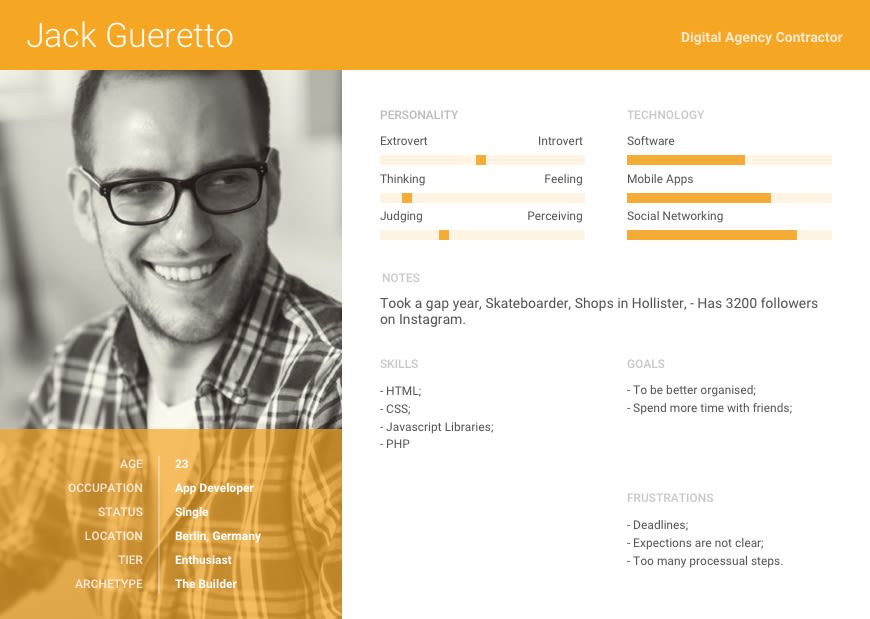
Identifying the customer
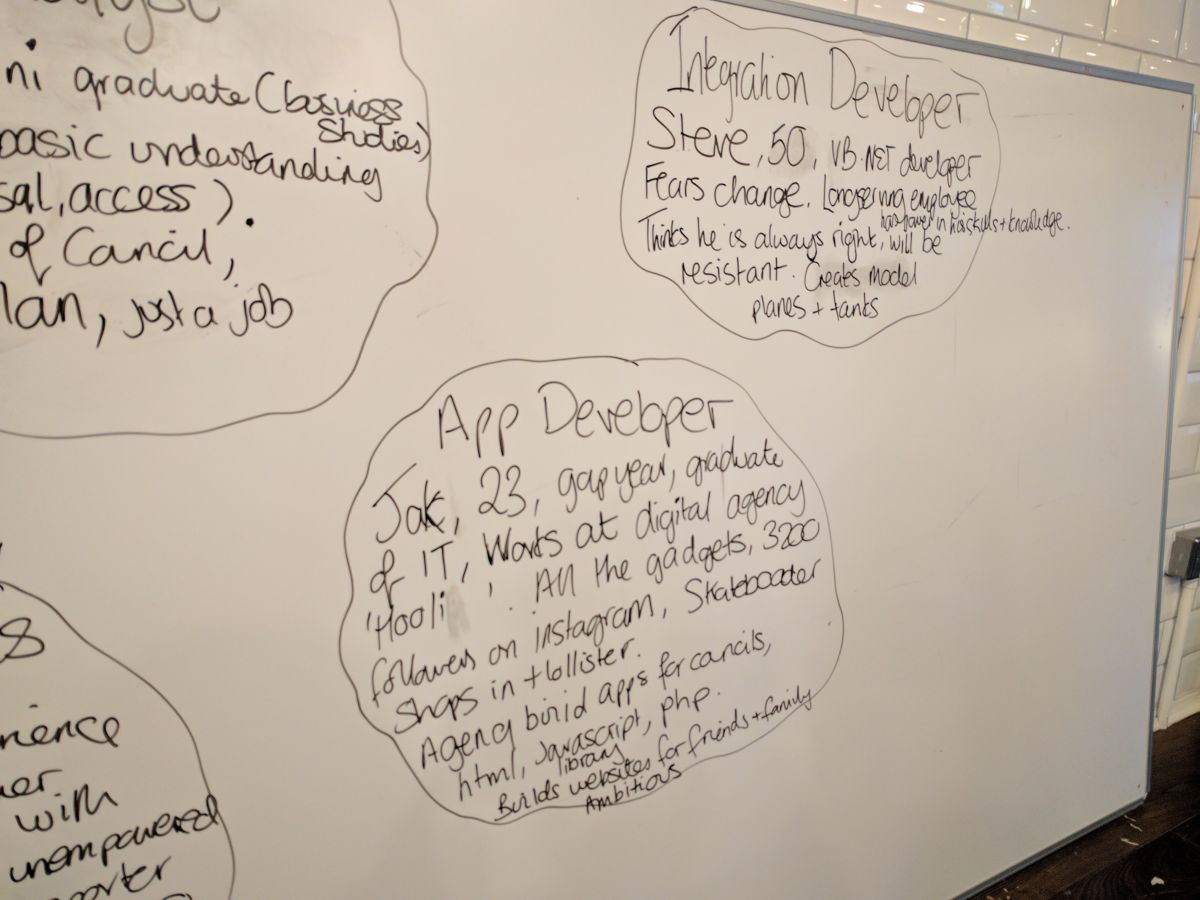
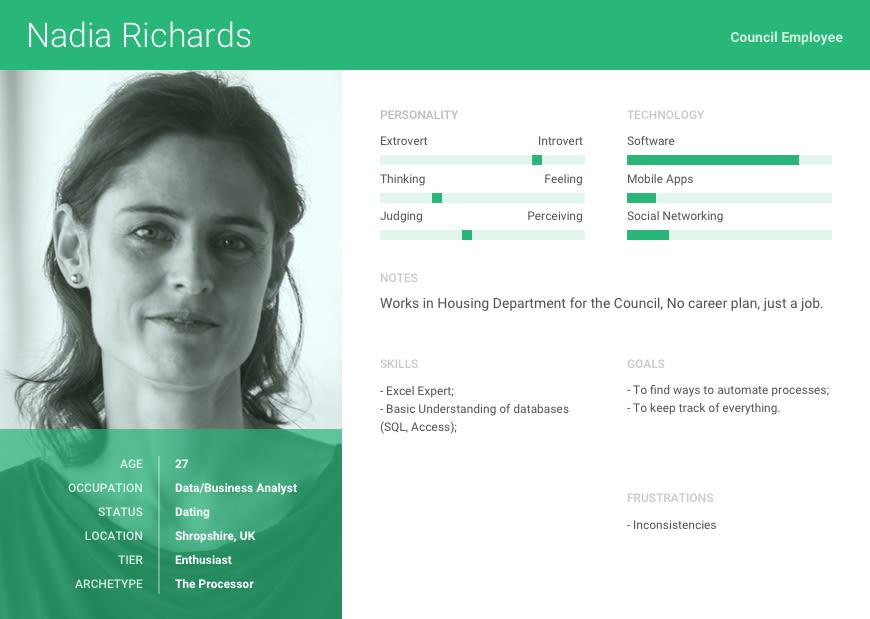
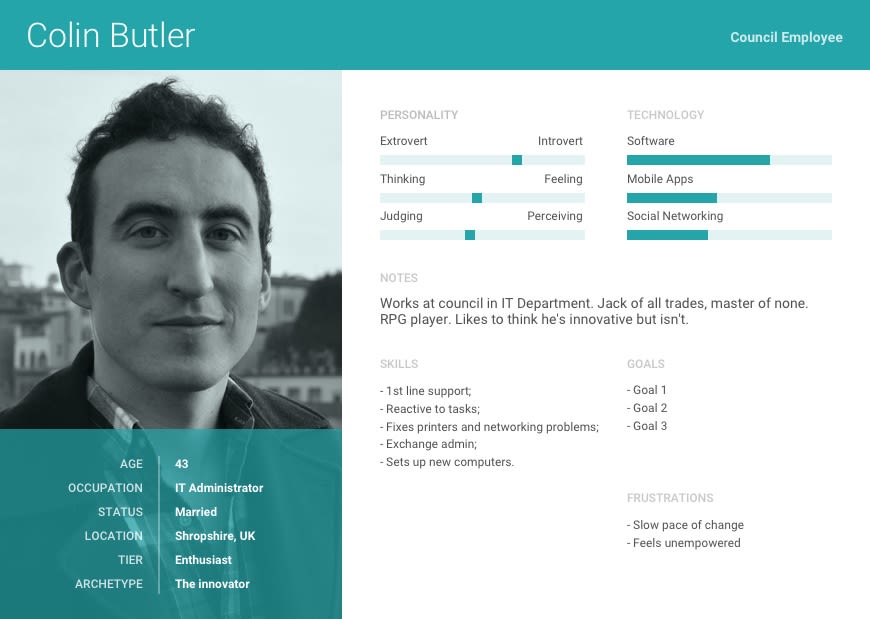
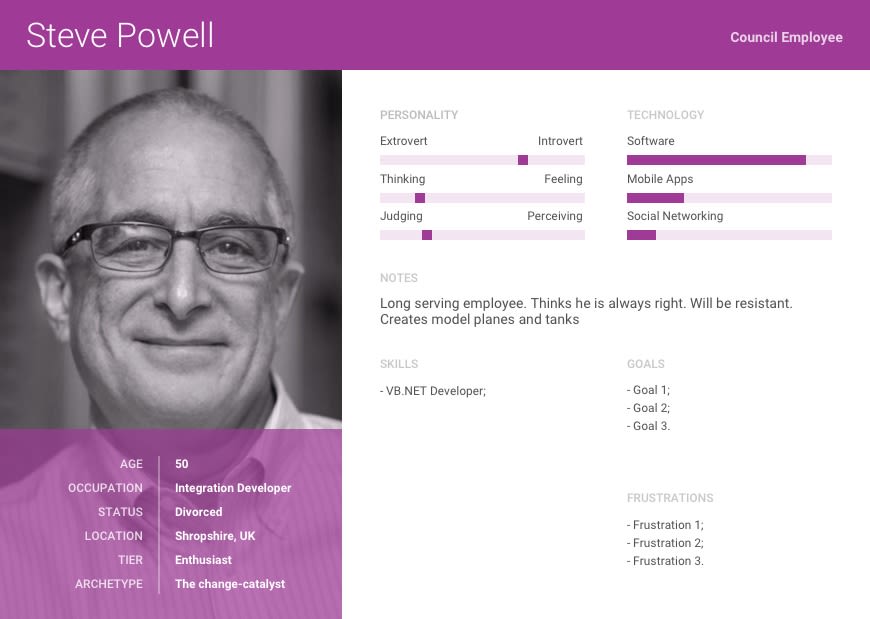
Early customer research revealed a critical insight: we weren't building for one user type, we were building for two fundamentally different audiences with conflicting needs. Developers wanted speed and control, favouring code and APIs. Business analysts, operations managers, and startup founders with limited IT budgets needed GUI-based simplicity for tasks they'd perform themselves.
This created a product strategy dilemma. Building separate interfaces would double development costs and split our go-to-market focus. The insight that shaped our approach: these weren't actually different use cases, they were different skill levels approaching the same problem. I designed for progressive complexity, where the core workflow optimised for the least technical user, with advanced features accessible to power users who knew where to look.
Targeting SMEs and smaller fintechs meant we couldn't assume dedicated IT teams. The platform needed to enable organisations to bring data together from any number of sources so it could be viewed, transformed and shared across departments and between companies, all without requiring specialist expertise. This decision influenced every subsequent design choice and became a competitive differentiator: competitors either built for developers or dumbed down their platforms. We could serve both markets from a single product, making enterprise integration accessible to organisations where this capability had previously been out of reach due to complexity and expense.

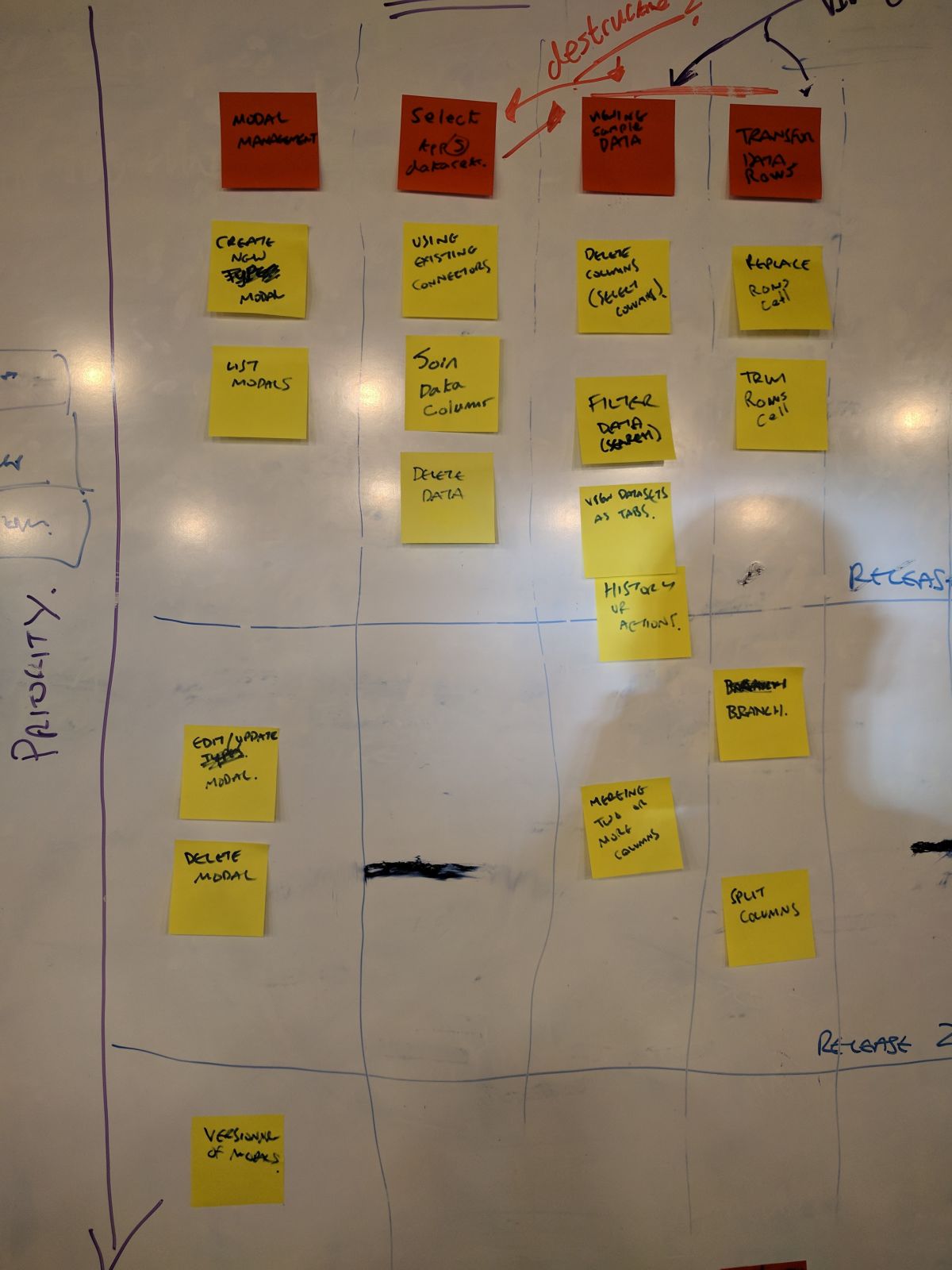
Feature prioritisation
With a small team and limited runway, every feature decision carried opportunity cost. Building the wrong thing wasn't just wasteful, it was existential. I ran structured prioritisation sessions using heuristic analysis to force explicit trade-offs between competing features.
The framework evaluated features across multiple dimensions: user value, technical complexity, time to implement, and strategic positioning value. This created shared language for decision-making and prevented features being prioritised based on whoever argued loudest. It also surfaced hidden assumptions that, when discussed openly, often changed our assessment of feature value.
This disciplined approach to prioritisation kept the team focused on MVP-critical features and prevented scope creep that could have delayed launch. More importantly, it built a decision-making culture that persisted beyond my direct involvement.

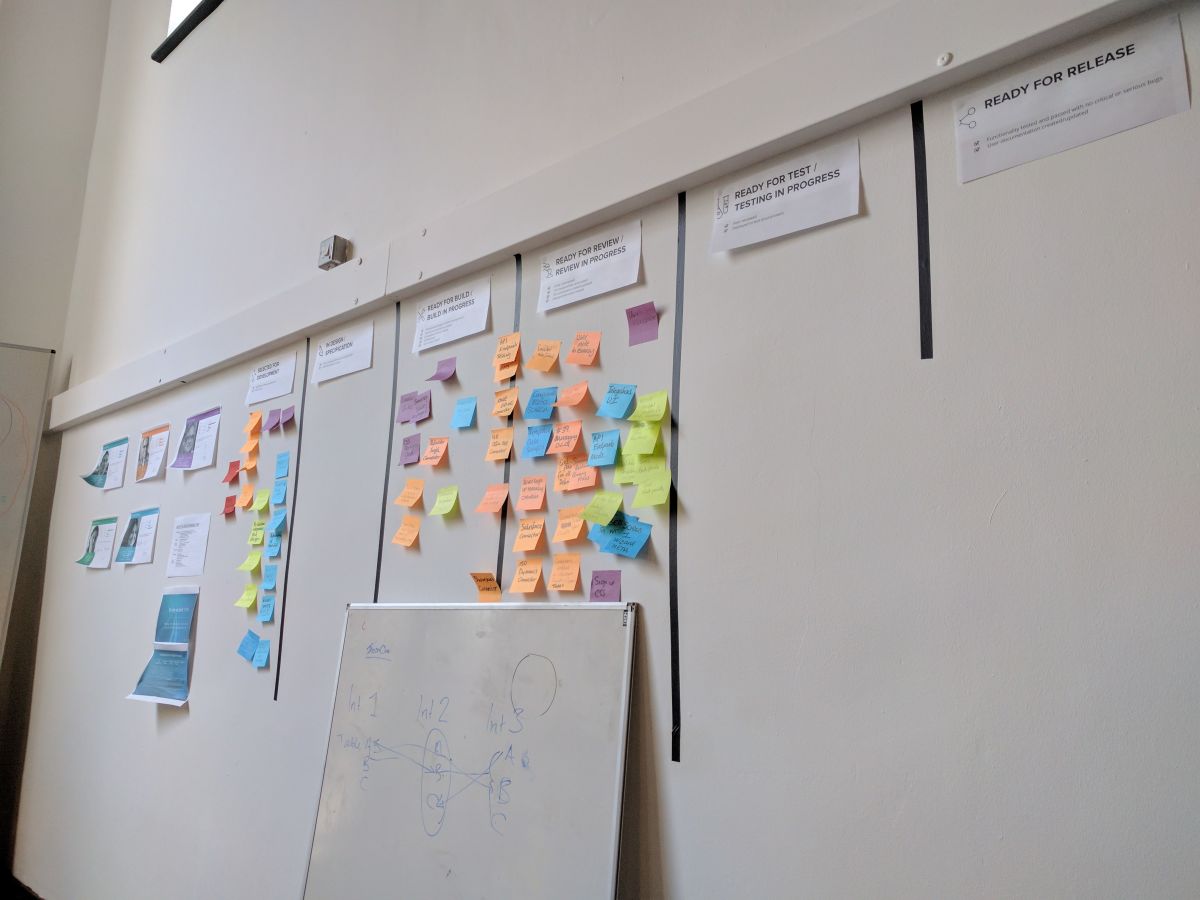
Collaboration
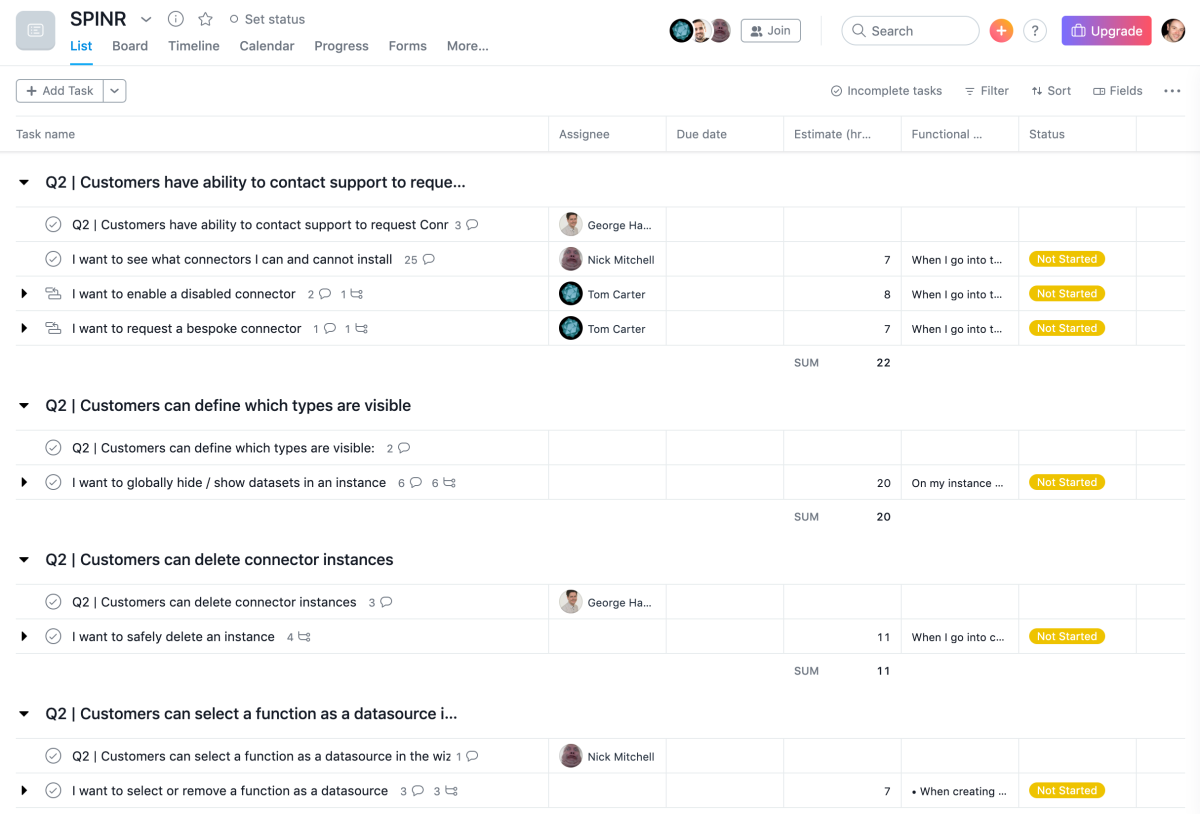
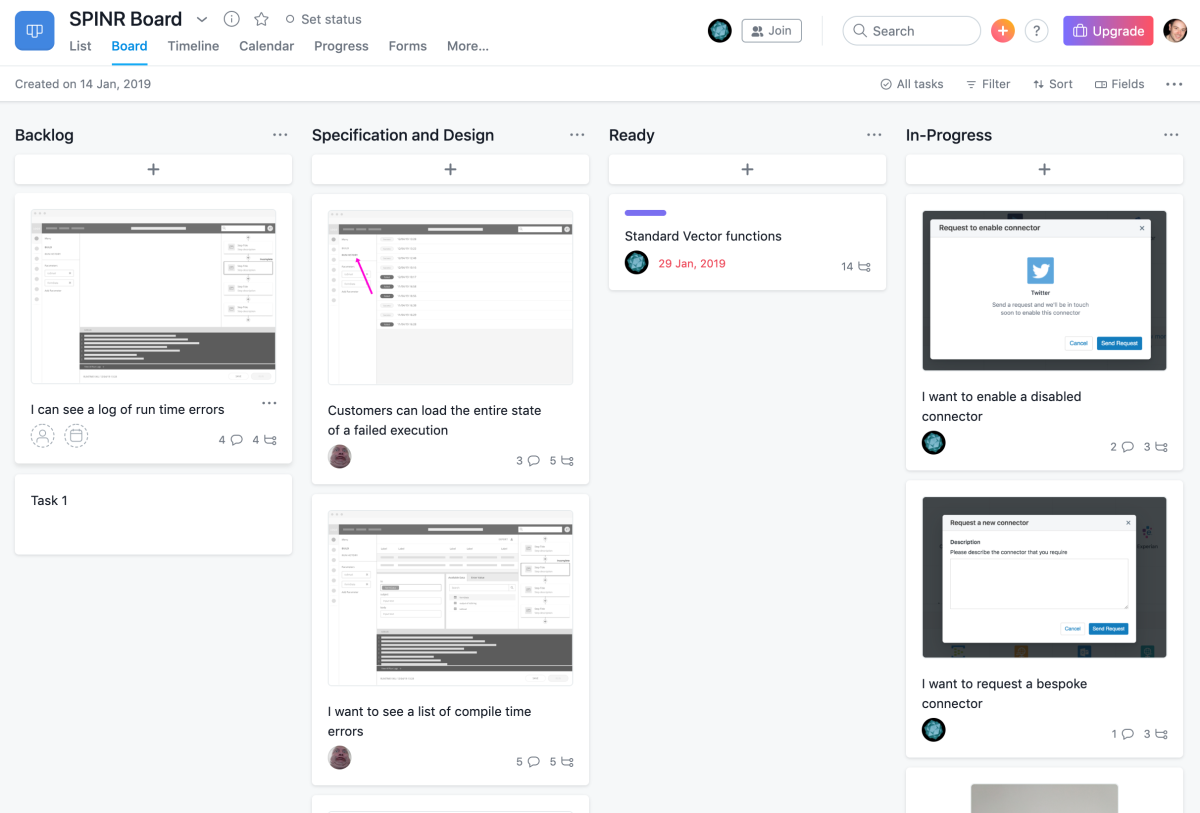
The team adopted a lean, iterative process managed through Asana. Rather than lengthy specification documents that became instantly outdated, we used task-based collaboration where requirements, designs, and feedback lived alongside the work itself. This reduced context-switching overhead and created a single source of truth.
This working method was particularly valuable given our distributed team. Asana's structure forced clarity in task definition and made dependencies explicit, preventing the coordination failures common in remote teams. The approach became our operational advantage: we could move faster than competitors with larger, co-located teams because our process created less friction.
The data creation wizard
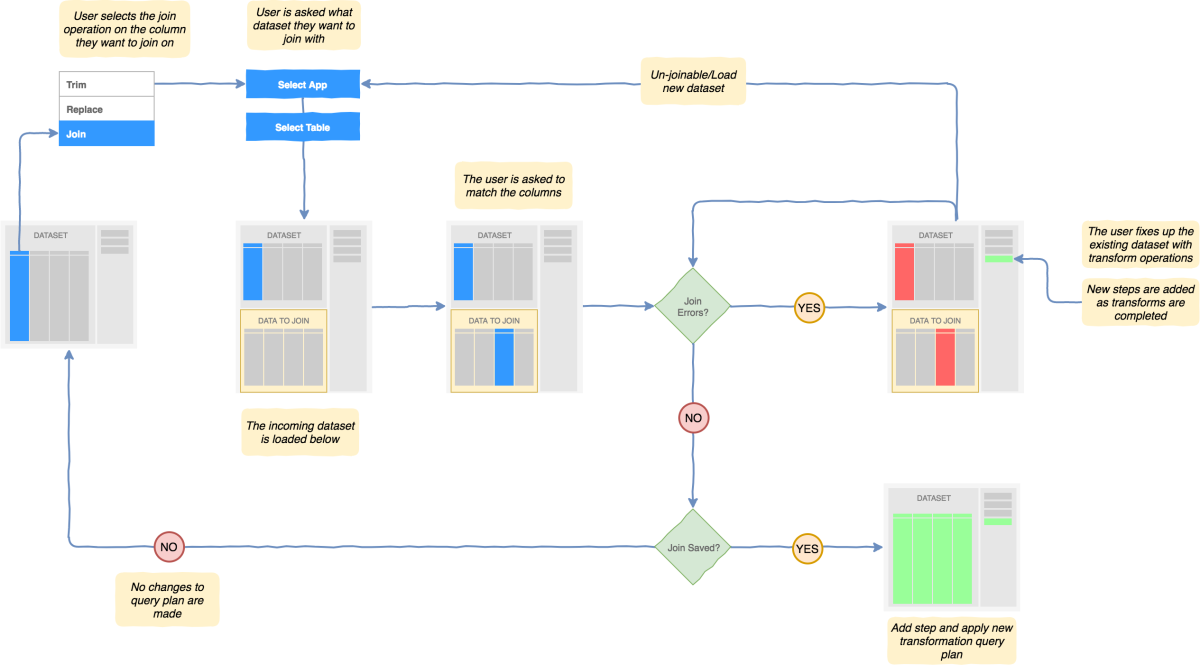
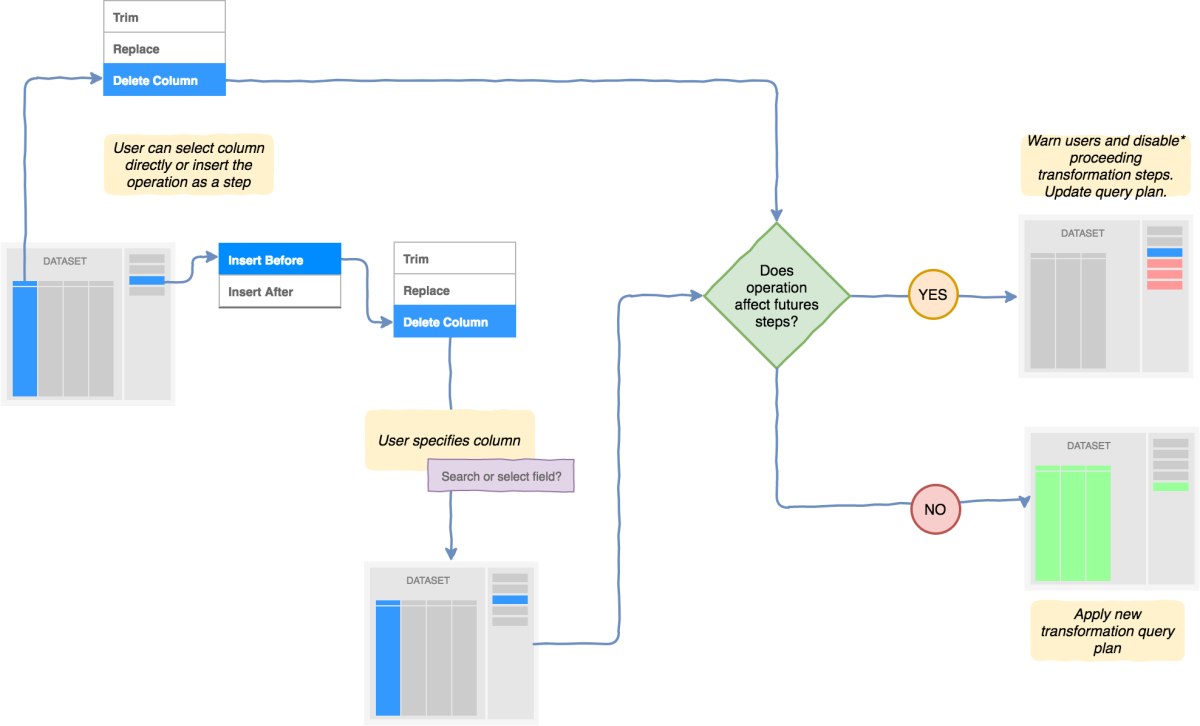
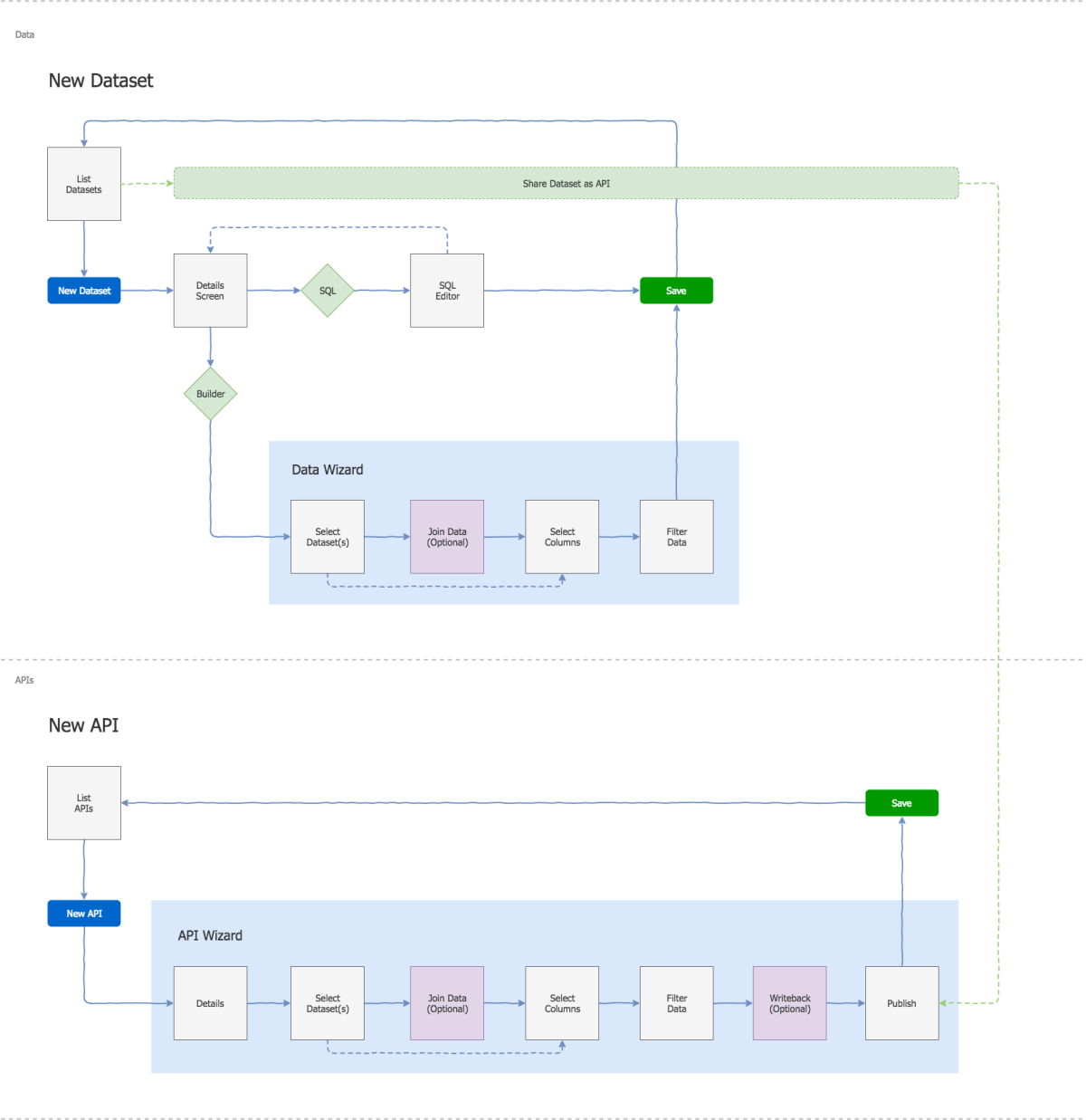
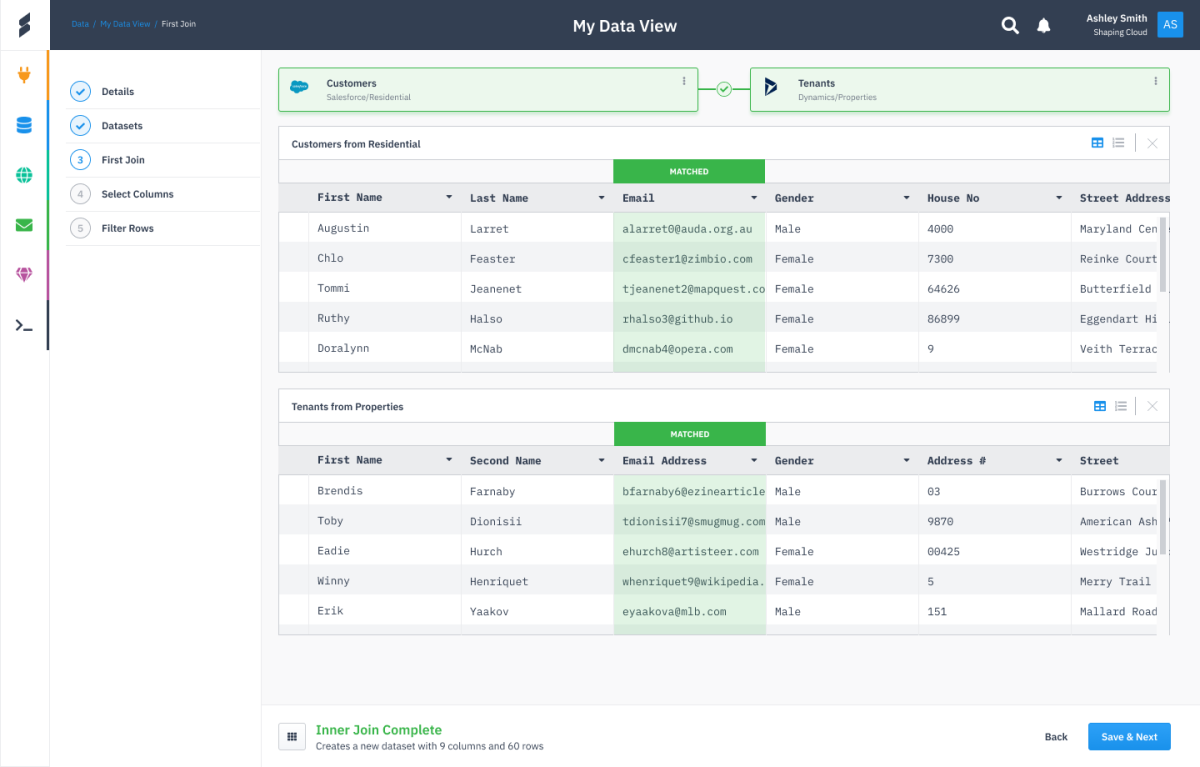
The data creation wizard was SPINR's core value proposition and its most complex UX challenge. Users needed to connect disparate data sources, cleanse messy data, and create joined datasets, all without SQL knowledge or developer intervention. This was the heart of our mission to set critical data free from application and departmental silos.
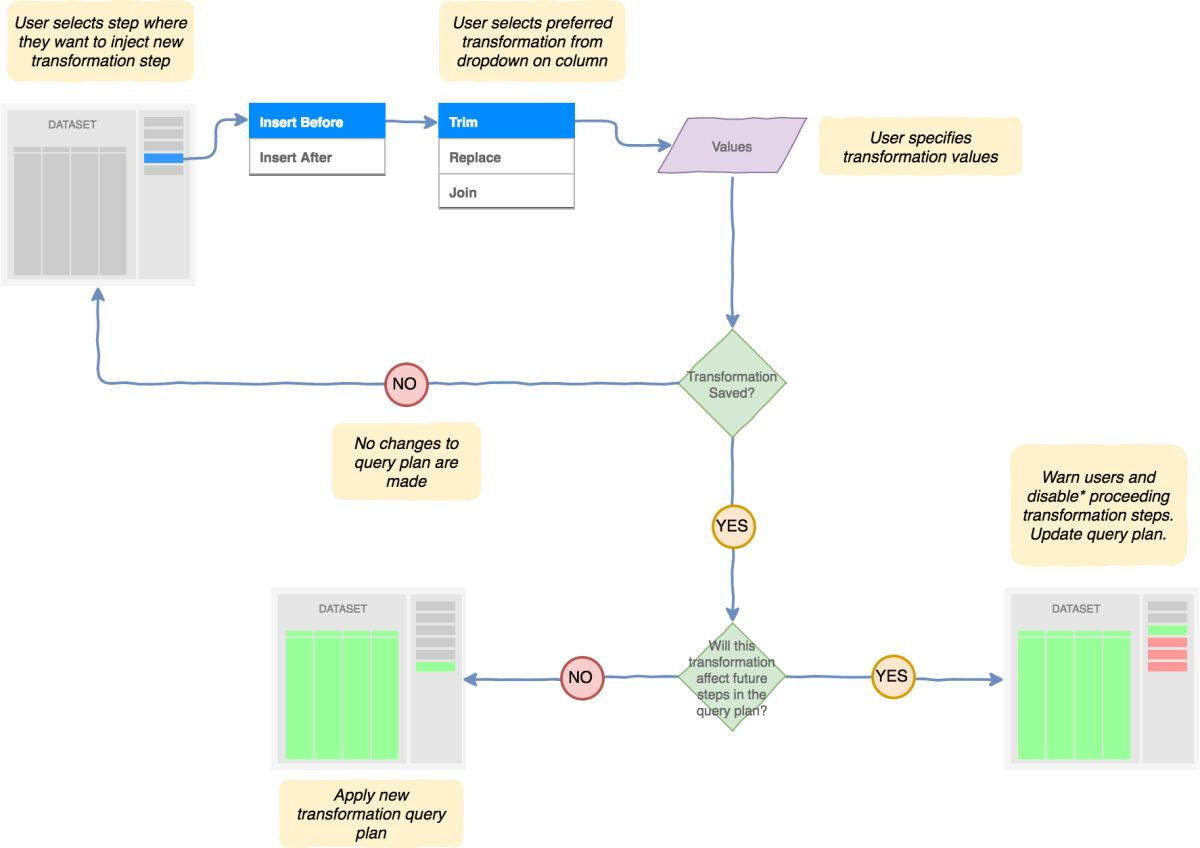
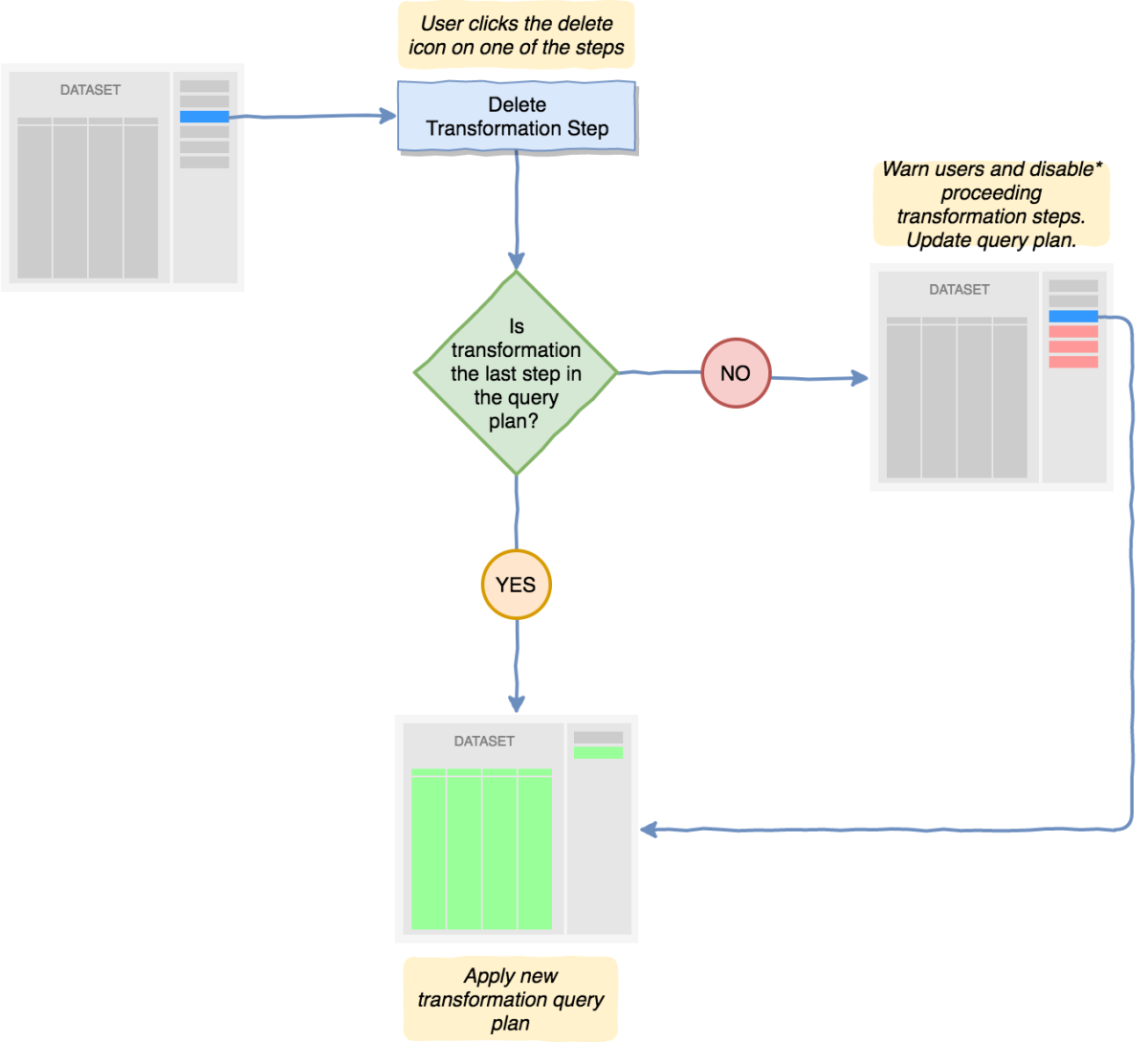
The design challenge was making an inherently complex workflow feel manageable. I broke the process into discrete steps with clear progression, preventing users from feeling overwhelmed by the full scope upfront. Each step provided immediate feedback, showing users exactly what their transformations were doing to the data. This transparency was essential: smaller organisations couldn't afford to debug opaque systems or rely on external consultants to understand what their integration platform was doing.
The critical insight: rather than hiding complexity, make it visible but structured. Instead of a "smart" system that made decisions opaquely, I designed transparent controls where users could see and understand each transformation. This built trust and made debugging possible, directly addressing the "black box" problem that plagued competing platforms and caused adoption resistance among technical users.
For SMEs and startups trying to launch products quickly, the wizard needed to enable efficient creation, management and distribution of APIs. Real-time data services working seamlessly would drive better collaboration within teams and allow new products and services to be launched faster than traditional integration approaches allowed. The interface needed to support this velocity without sacrificing reliability.


Wireframes
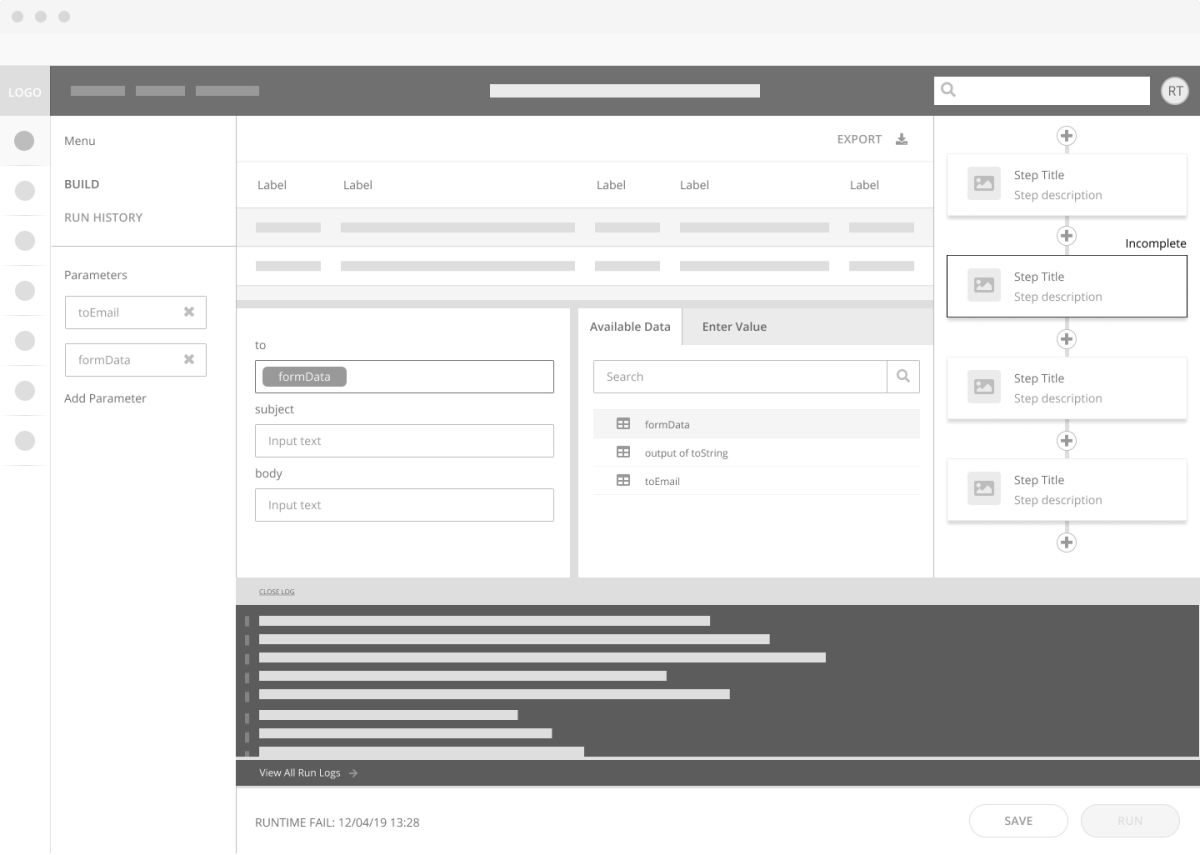
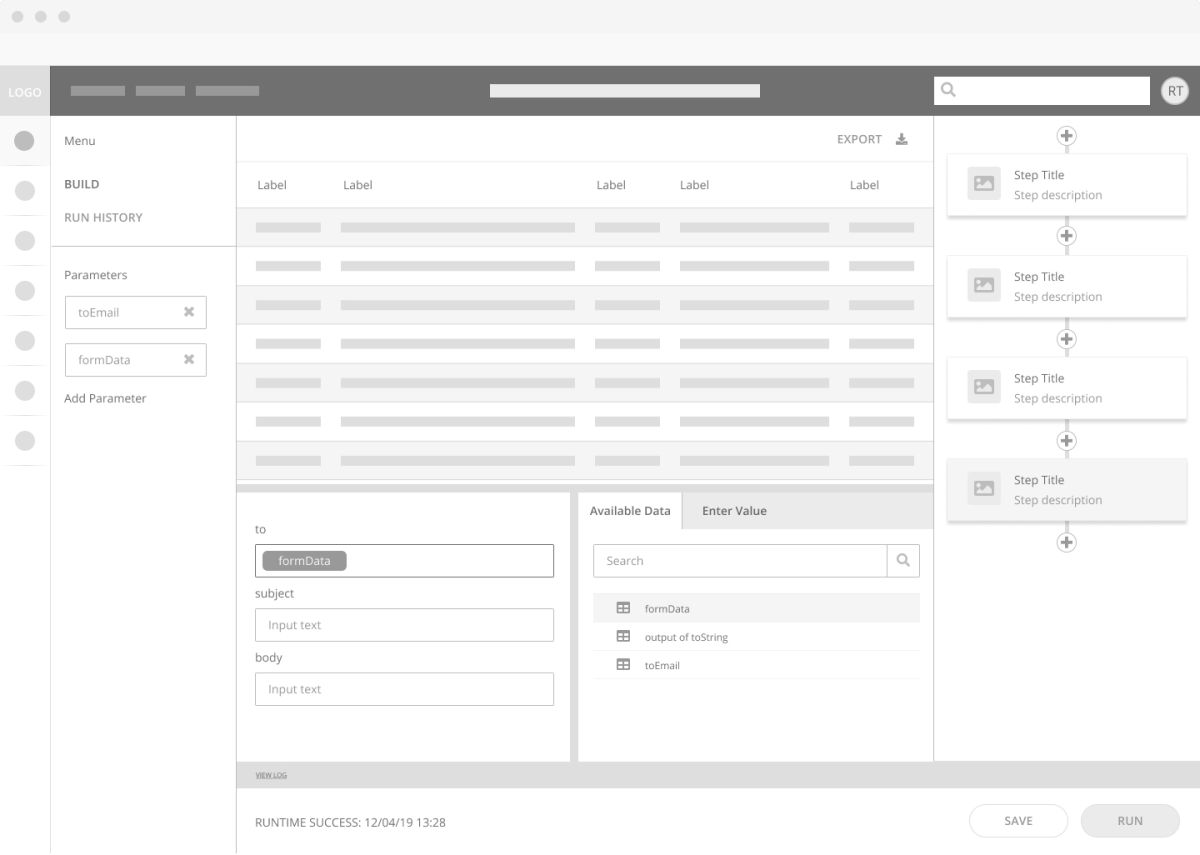
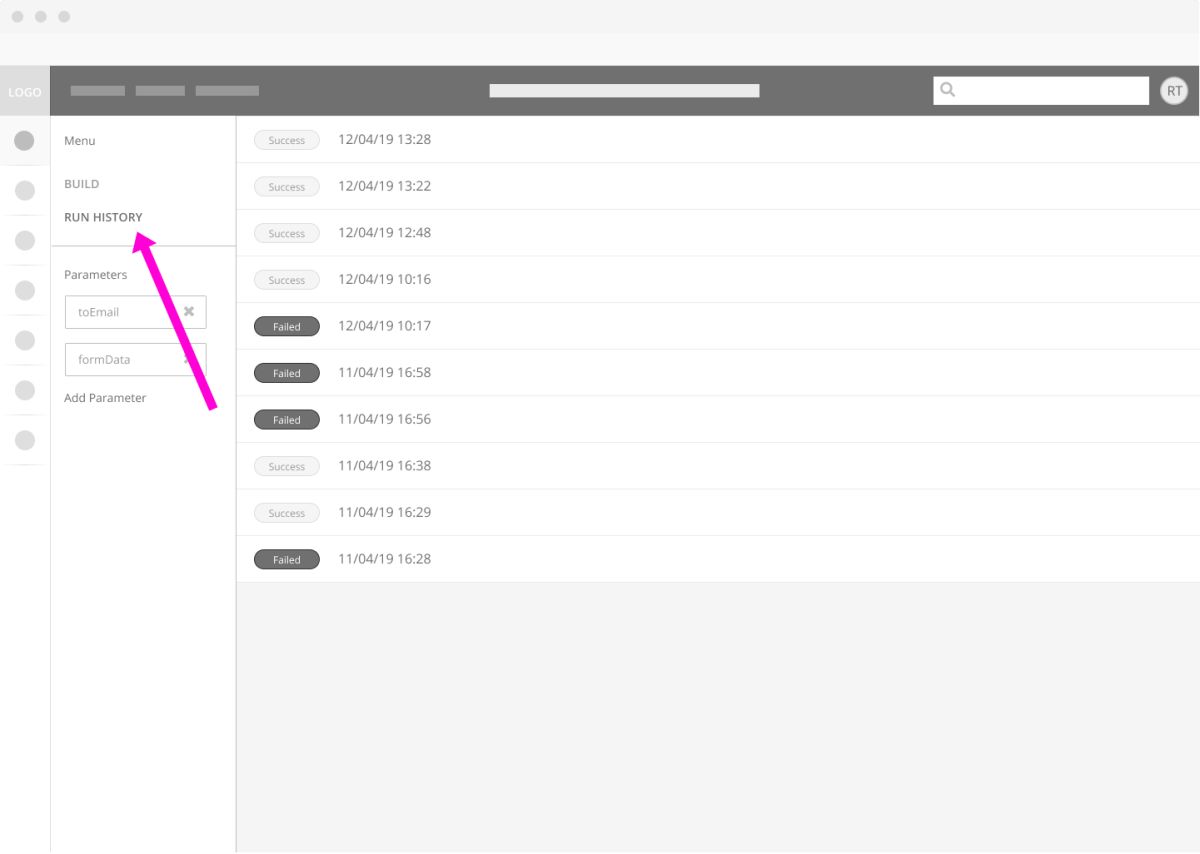
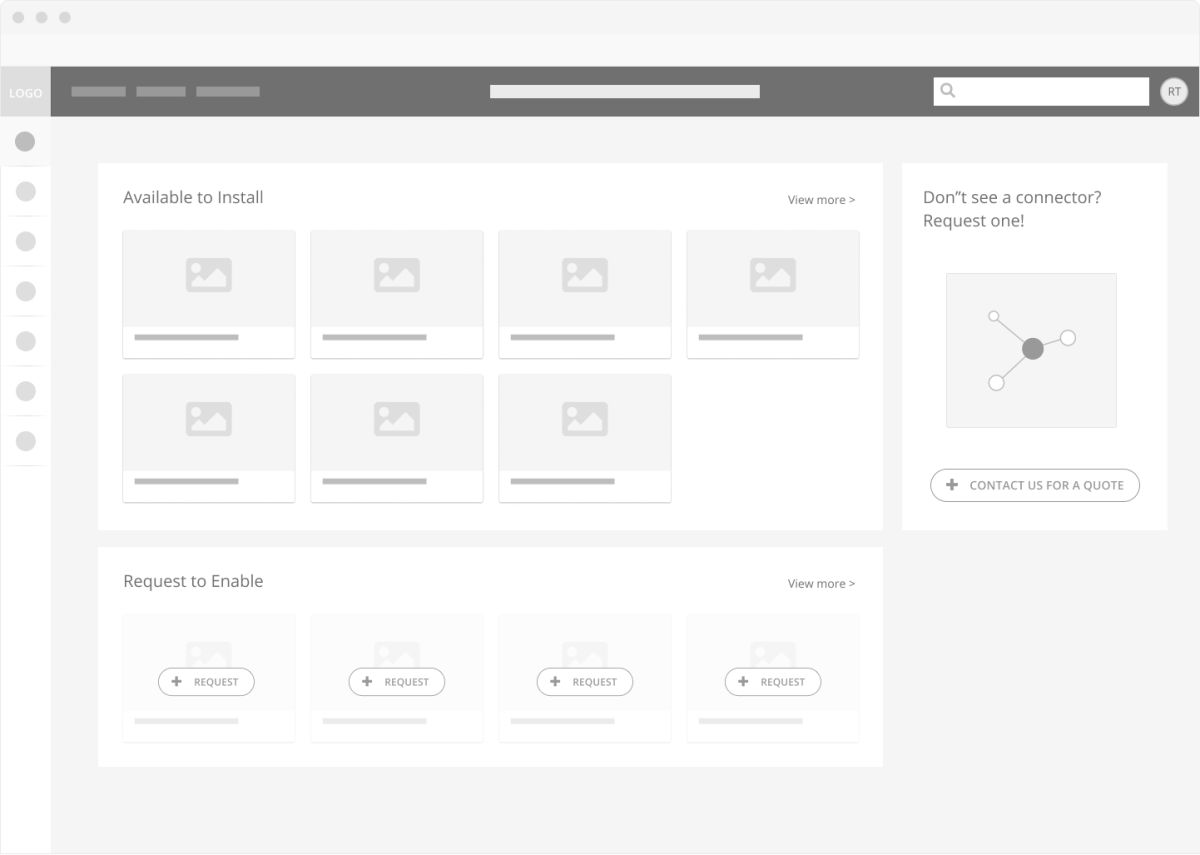
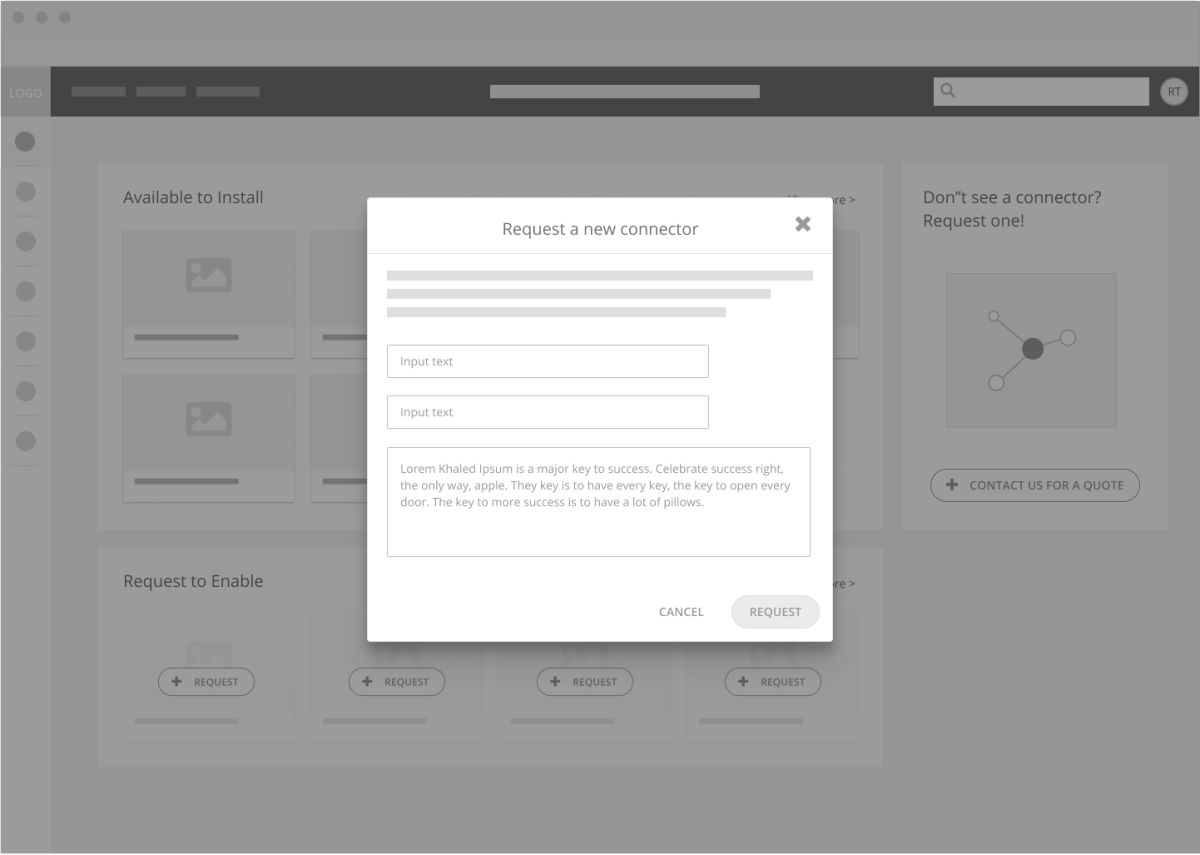
I produced extensive wireframes that served dual purposes: communicating design intent to developers and validating feasibility with technical leadership. Design sessions with the CEO and CTO forced me to balance ideal user experiences against technical and timeline constraints, a tension that improved both the designs and our collective understanding of what was actually buildable.
When possible, I validated designs with prospective customers through clickable prototypes. This early exposure served a strategic purpose beyond UX validation: it generated customer interest before launch, converting design artefacts into sales tools. Several early customers committed based on prototype demonstrations, proving demand before we'd written production code.
These prototypes also functioned as specifications for development, reducing the interpretation gaps that typically exist between design and implementation. This accelerated development and reduced rework.

Standing out from the crowd
In enterprise software, credibility influences buying decisions as much as functionality. Buyers assess platforms through visual polish as a proxy for underlying quality and vendor stability. A startup challenging established vendors with innovative technology but amateur-looking UI would struggle to close deals regardless of technical merit.
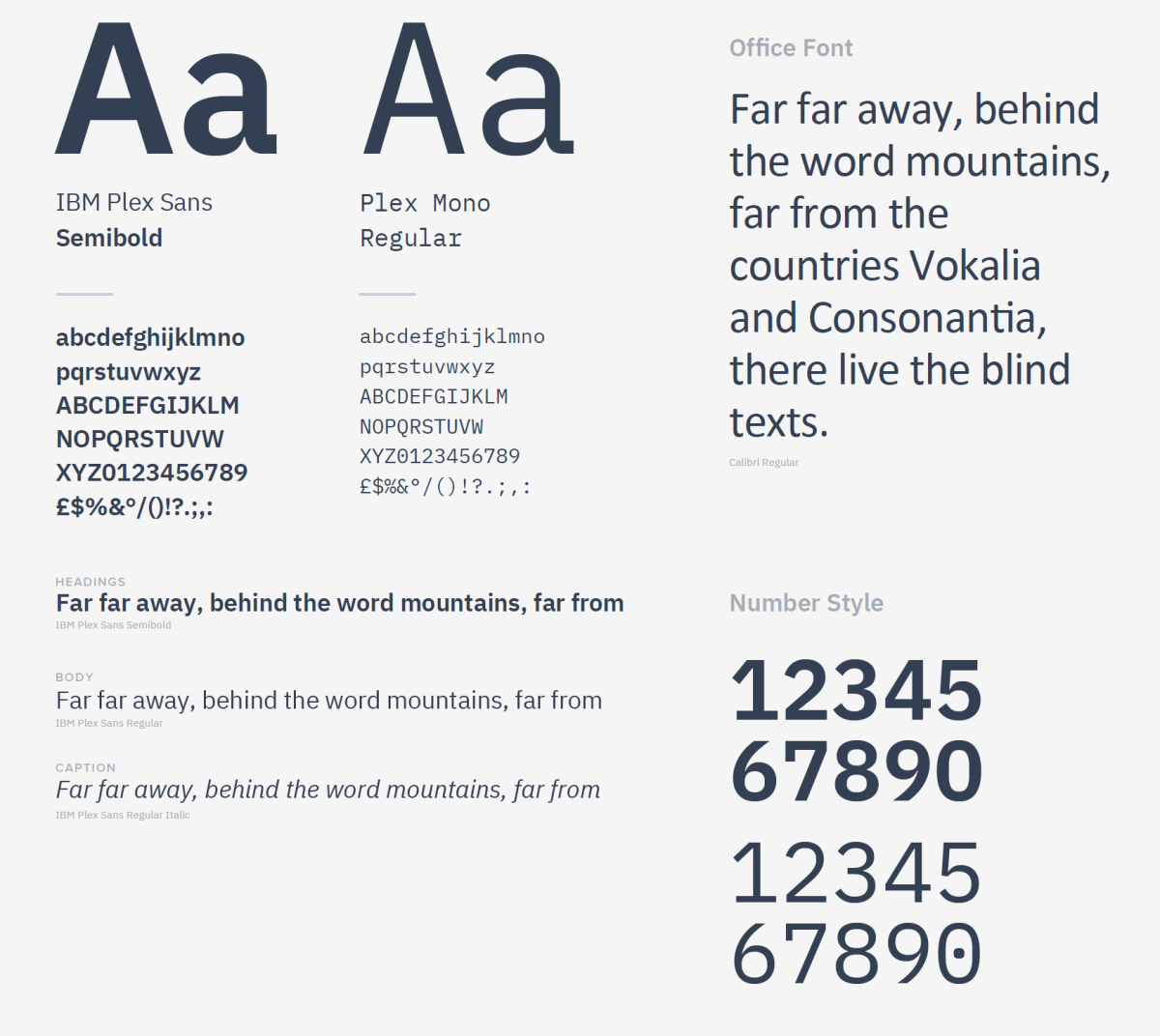
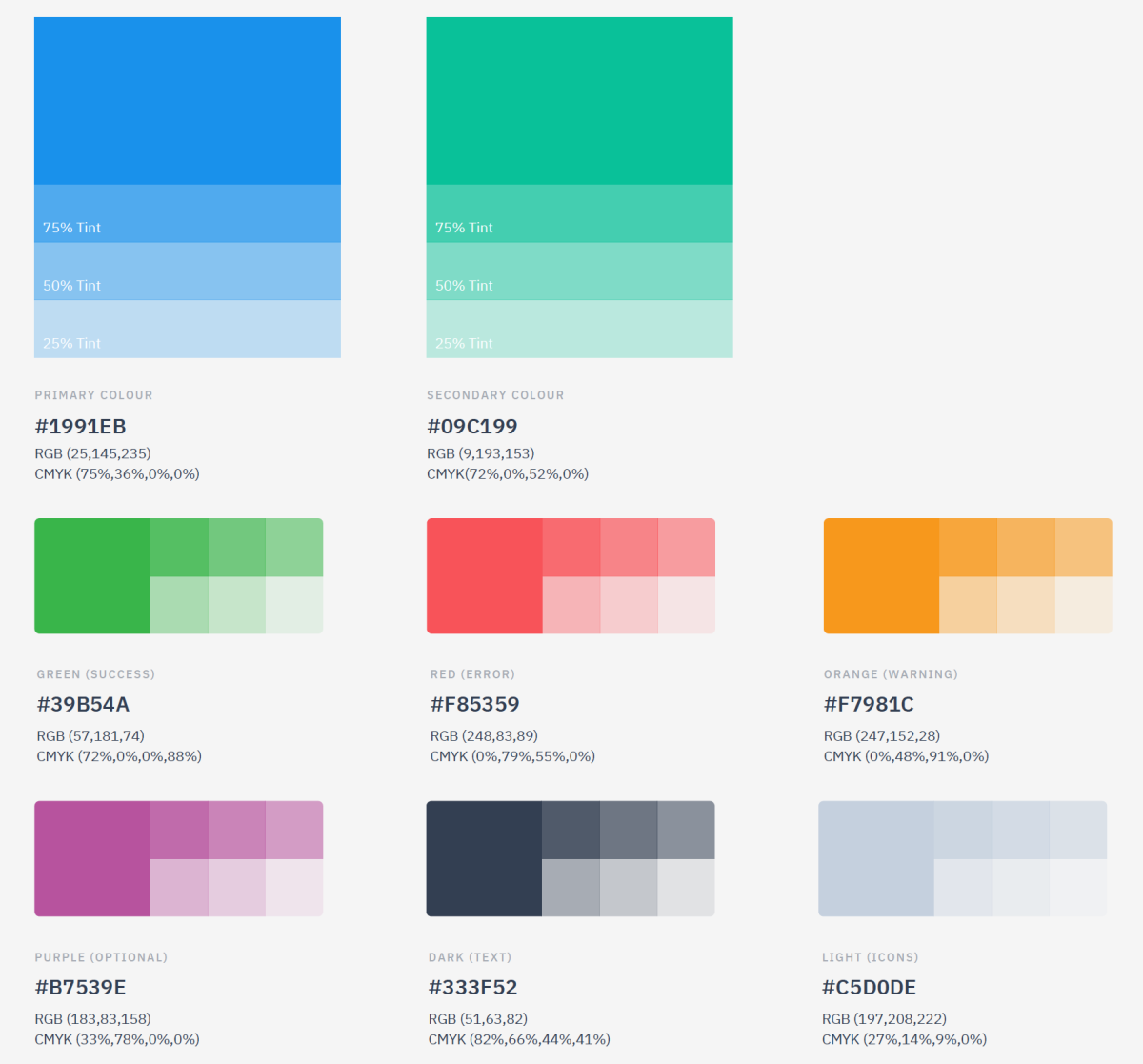
I developed a comprehensive brand and design system that communicated professionalism and sophistication whilst remaining approachable. The visual language needed to work across multiple contexts: in-app workflows, marketing materials, sales demonstrations, and technical documentation. Consistency across these touchpoints reinforced the perception of a mature, well-organised company.
The brand guidelines I created became reference documentation for the entire company, ensuring visual consistency even as the team scaled and external contractors contributed. This upfront investment in design infrastructure paid ongoing dividends by reducing design debt and decision fatigue.

Bringing it together
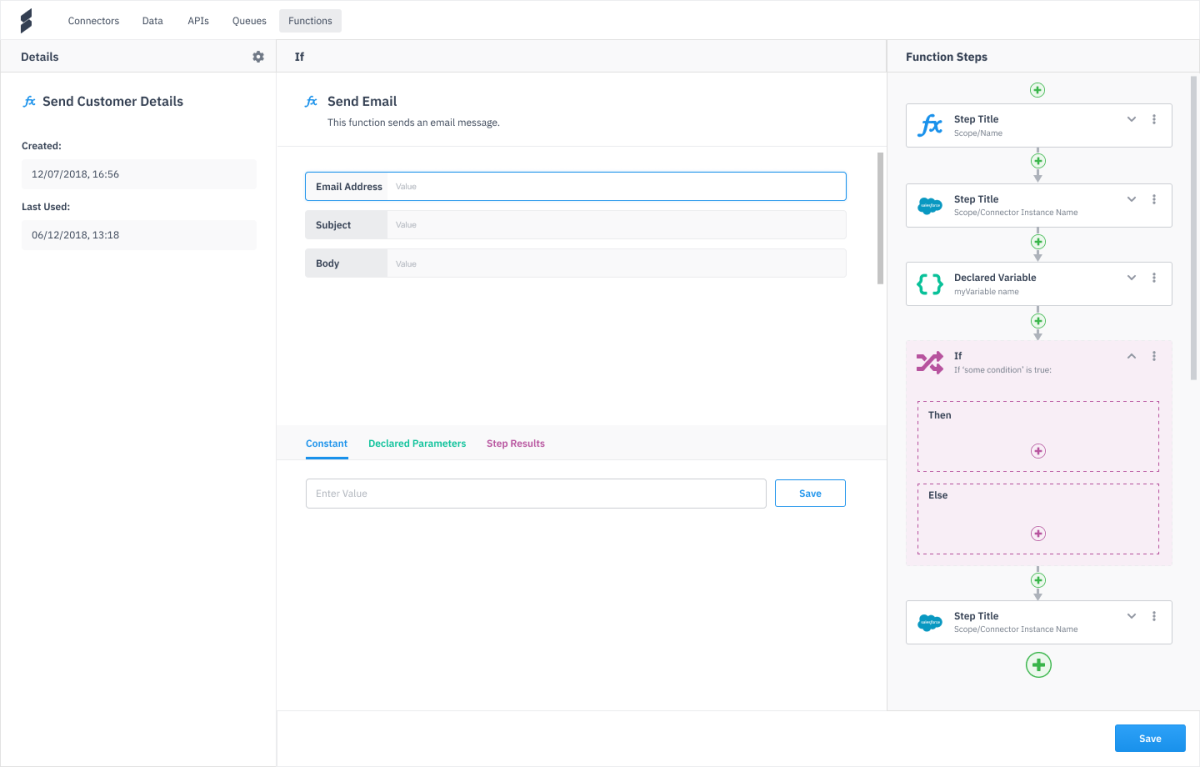
Implementing the design system wasn't just about aesthetics, it was about velocity. By creating reusable components with consistent behaviour, we reduced the time to design and build new features. Each new screen could be assembled from existing, tested components rather than designed and coded from scratch.
I worked closely with the front end developer to build components in React that mirrored my Figma designs. Figma's ability to ingest React components created a unique workflow: designs used actual production components, ensuring what I designed was precisely what users would experience. This eliminated the traditional design-to-development gap and reduced QA cycles.
This component-driven approach became increasingly valuable as the product matured. Features built months apart maintained visual and behavioural consistency without requiring active design oversight, allowing the platform to scale without me becoming a bottleneck.
Attracting a crowd
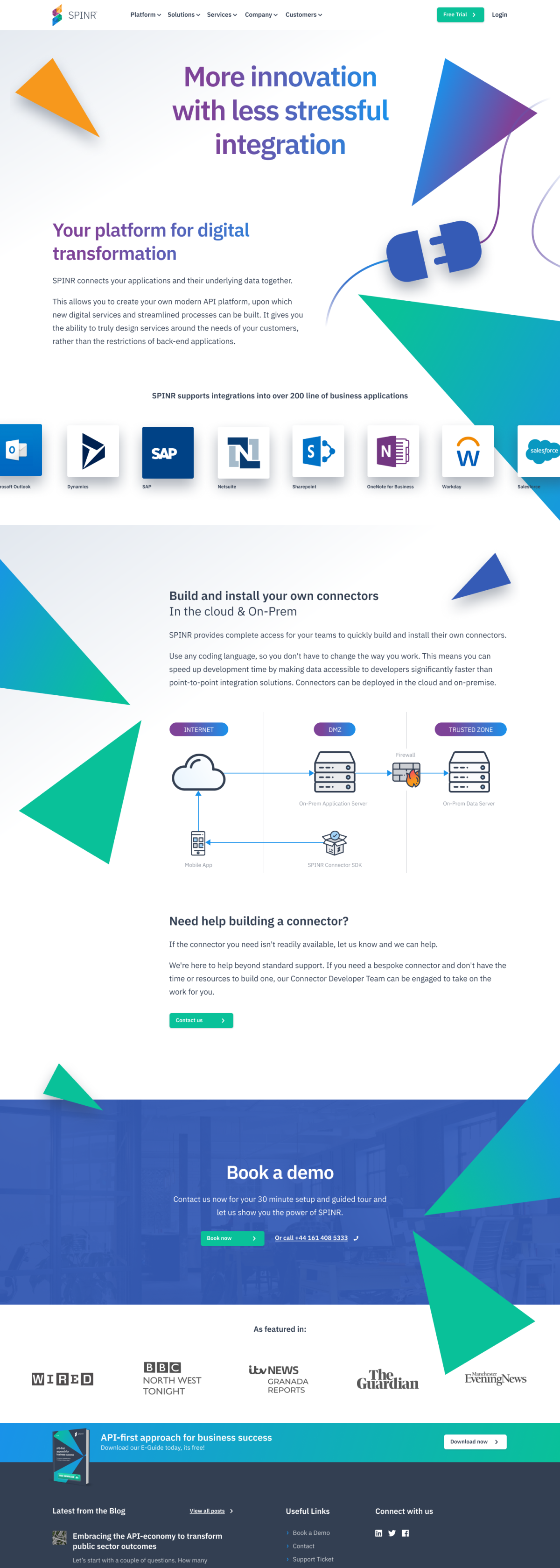
The marketing site needed to overcome scepticism from technical buyers whilst remaining comprehensible to non-technical decision-makers. Rather than leading with technology or jargon, I structured the site around business outcomes: faster integration, reduced IT overhead, and accelerated application development.
With the front end developer stretched on feature work, I personally designed and built the site with the knowledge I had. The site was built using Zurb Foundation 6 and Jekyll. I also implemented a lighteight CMS that meant our product owner could update content without my involvement.
The site served a strategic function beyond marketing: it established credibility with enterprise buyers who scrutinise vendor websites as part of due diligence. A well-designed, professional site signalled a serious company worth considering, whilst a poor site would have eliminated us from consideration regardless of product quality.

Results
SPINR launched in February 2019, bringing enterprise-grade data management to SMEs in financial services and beyond. The platform secured its first enterprise customer, South Yorkshire Fire & Rescue, demonstrating product-market fit in the public sector. The platform successfully bridged data silos between SYFR and Barnsley Council, replacing paper-based workflows with automated data sharing. This deployment validated our core thesis: organisations were willing to adopt new integration tools if the complexity barrier was sufficiently reduced and the cost made it accessible.
The South Yorkshire implementation generated organic interest from other fire and rescue services nationally, creating the early network effects critical for platform plays. More significantly, it proved that our "progressive complexity" design approach worked: non-technical administrators could perform integrations previously requiring developer involvement. This democratisation of data integration meant smaller organisations could finally unlock the value in their data without expensive consultants or dedicated integration teams.
The platform enabled organisations to control and maximise their data using a single, straightforward interface through which data could be brought together from any number of sources, viewed, transformed and shared across departments and between companies. For smaller fintechs in particular, this new ability to maximise data affordably whilst onboarding new customers in a fraction of the time represented a genuine shift in what was possible at their scale.
The project secured multiple funding rounds based on demonstrated traction, validating both the product strategy and go-to-market approach. The design system and component library I established became foundational infrastructure that reduced development time for subsequent features, creating compounding returns on the initial design investment. SPINR spun out from Shaping Cloud to become a separate business within the newly formed Shaping Cloud Group, reflecting the platform's potential to serve markets beyond the parent company's traditional consultancy focus.
" Working with SPINR provided a technically brilliant, compliant solution and their willingness to get things done was great. It was also significant that the team at SPINR understood the problem and cared as much about the outcome as we did which made all the difference. "
SPINR Intro
See how SPINR can help you