BrightEX Preference Centre
I identified and resolved systemic friction in the Bright Exchange marketplace, increasing affiliate conversions through onboarding and preference-driven personalisation.

Tools
GA4, Userpilot, Figma
Duration
2 weeks
Deliverables
Product Design, Quant/Qual Research
Current State
BrightExchange was supposed to be the jewel in the crown. An exclusive marketplace connecting over a million BrightHR customers with deals and perks. The traffic was there. But conversion wasn't.
Users browsed constantly but rarely followed through. Affiliate partnerships adverts (the ones generating revenue) competed for visibility with customer adverts that generated nothing. The platform was cannibalising its own commercial model.
Desired State
Transform the marketplace through intelligent matching, not aggressive selling. The system needed to understand what mattered to each user and surface relevance immediately. Above the fold. First glance.
The experience shouldn't feel like a marketplace. It should feel like a curated selection of offers that actually matter.
A preference centre where users could set preferences. Update interests and feel in control.
Discovery & Research
Behavioural Analysis (GA)
Before any design work, I needed to understand the underlying behaviours, the gaps in our measurement, and what was actually stopping people from converting. I started by examining how people were actually using the platform. I looked at the last 90 days of GA data between September and December 2025.
Healthy traffic numbers on the surface but the core logged-in offers page told a different story. Users were checking in, not exploring. Passive scanning: arrive, glance above the fold, leave.
Key Metrics
Active Users
87,804
90-day period
Page Views
440,122
Across all Exchange pages
Views / User (Offers)
2.18
Not exploring — checking in
Avg. Engagement Time
38s
Before leaving
Search Events / Session
1.16
Among those who searched
Users Who Searched
1,735
Just 1.97% of active users
Engagement Funnel
1. Active Users
2. Viewed Offers Page
3. Viewed an Ad
4. Redeemed an Offer
Critical Finding — Measurement Gap
Card-level redemptions weren't being tracked at all. A meaningful proportion of high-intent behaviour was completely invisible in reporting. Historical metrics were unreliable. I flagged this immediately and we implemented proper GA tracking on card-level redemptions before drawing any further conclusions.
Artifacts


Quantative Research
I then designed a lightweight survey that appeared directly within the Exchange marketplace launched via Userpilot. Eight questions, one conditional follow-up, with branched logic. I worked with the business to incentivise participation with a Lake District lodge stay prize draw. The survey ran from December 2025 through to early February 2026.
The survey received 282 responses.
Total Shown
18,824
Completed
282
Completion Rate
1.5%
Avg. Completion Time
2m 5s
Survey Insights
Have you ever made a purchase using an offer you redeemed on Bright Exchange?
- Yes 31%
- No 69%
Only 31% of users had ever converted a redeemed offer into an actual purchase — confirming the funnel was leaking well after initial engagement.
When you see an advert you like, what do you usually do?
- Click to read more 64%
- Haven't redeemed before 16%
- Redeem straight away 11%
- Bookmark for later 7%
- Leave without redeeming 2%
64% click to read more before deciding — intent exists, but the detail page had to work hard to earn the final action.
Have you ever created an advert for your own business on Bright Exchange?
- No 90%
- Didn't know I could 8%
- Yes 2%
90% had never created an advert, and 8% didn't even know they could — a critical awareness and onboarding gap in a two-sided marketplace.
Overall, how satisfied are you with Bright Exchange?
- Satisfied (4–5) 75%
- Neutral (3) 19%
- Dissatisfied (1–2) 6%
75% rated satisfaction 4 or 5 out of 5 — those who engaged with the platform valued it. The problem was getting users to that point of engagement.
Key Insights
What the data told me
- 72% browsed primarily for personal discounts; 46% described themselves as 'just browsing / curiosity' with no specific goal.
- Only 31% had ever completed a purchase via Exchange, despite significant traffic — the funnel was losing people after engagement.
- 64% clicked to read more before deciding, showing intent was present but trust and relevance needed to carry them through.
- 90% had never created an advert for their own business; 8% didn't even know they could — a major two-sided marketplace awareness gap.
- 75% rated overall satisfaction 4 or 5 out of 5, confirming the platform delivered value once users engaged deeply with it.
- 50% said they would rate likelihood to recommend at 5 out of 5 — advocacy was high among those who had successfully used the platform.
Artifacts


Behavioural friction
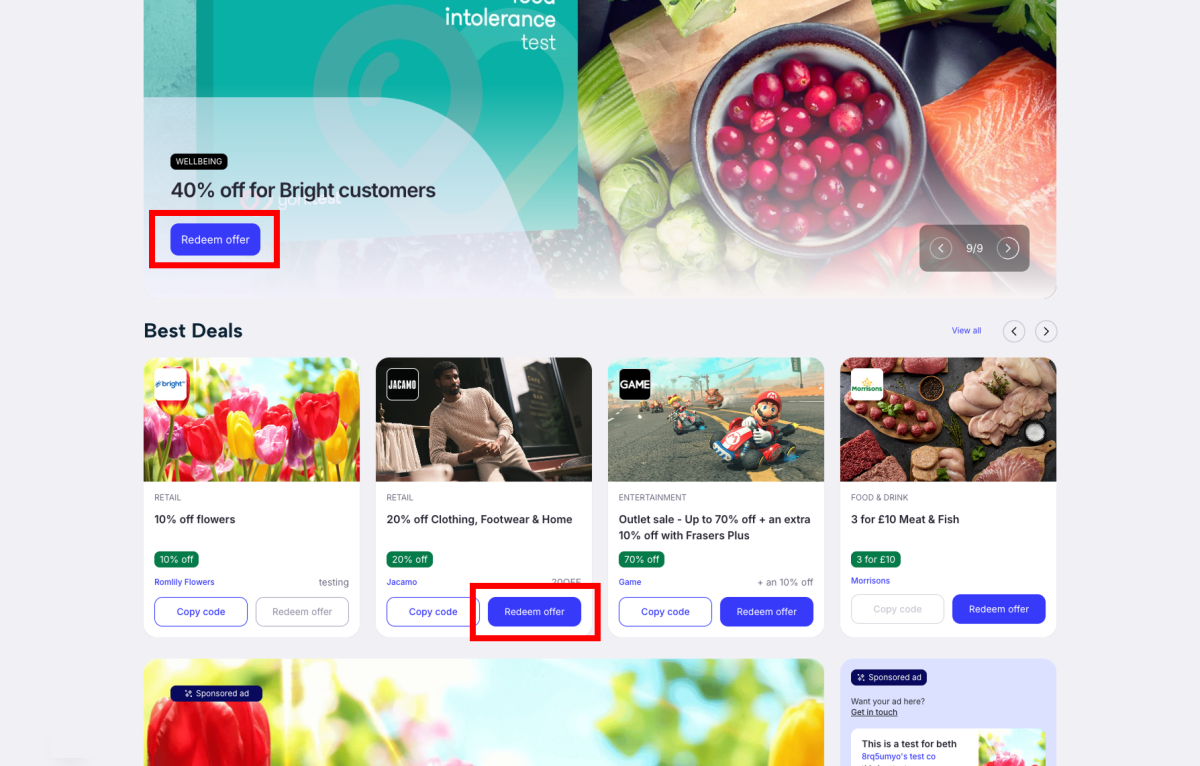
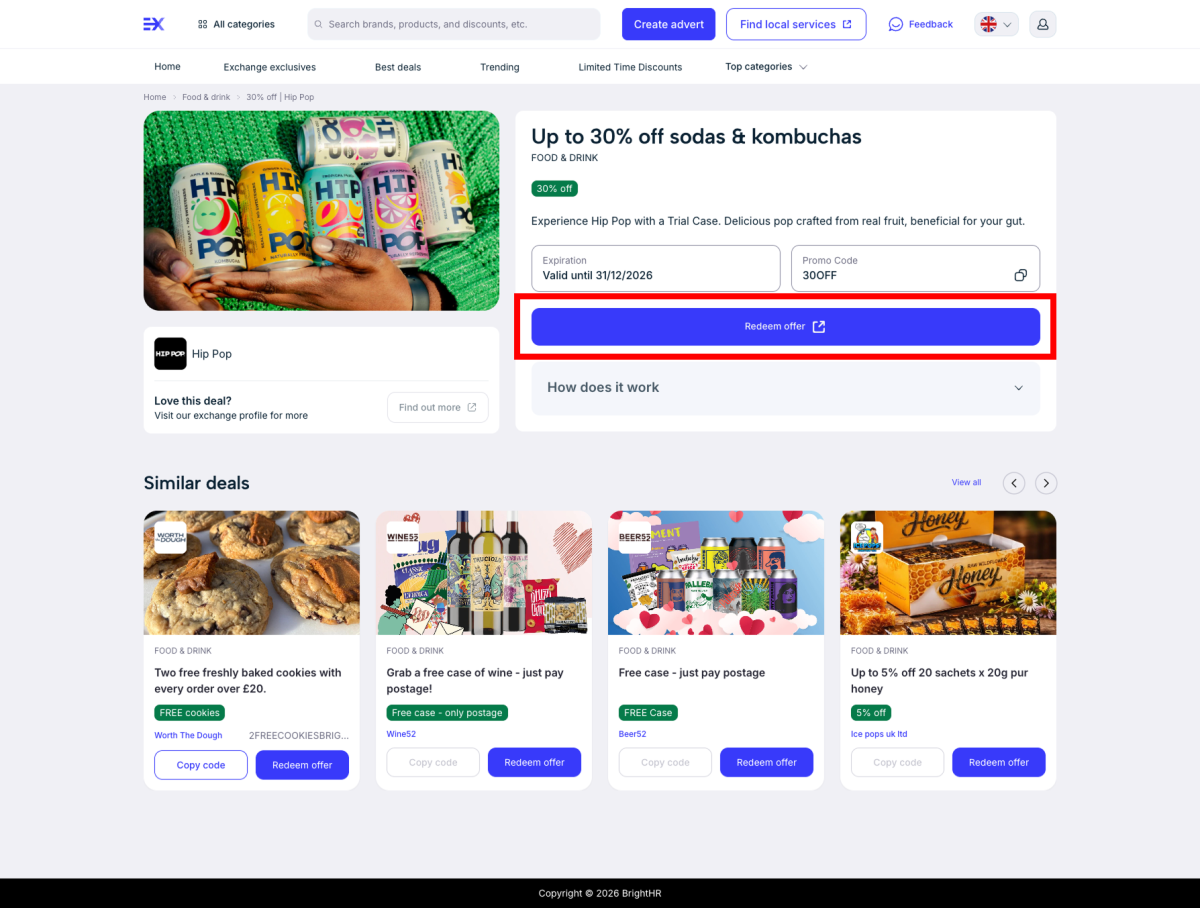
The current redeem offer flow:
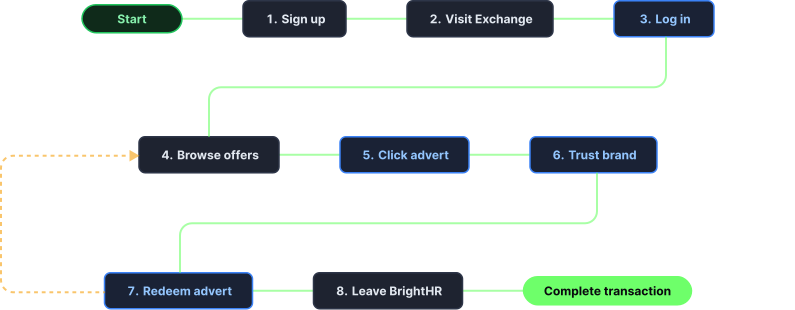
Nine steps. Nine opportunities to lose them. And at the end, Bright only earns revenue if they complete step nine.
This is a high-friction, multi-brand journey where users had to do all the work, it's no surprise conversion was low.
Marketplace conflict
Meanwhile, the BrightExchange commercial model was eating itself alive.
BrightHR also provides an affiliate network. Affiliates can purchase advert packages and launch adverts through our team. They don't even need Bright accounts. However, affiliate adverts (the ones generating actual revenue through commissions) were competing for visibility with free customer adverts (which generated nothing). Both were ordered primarily by recency, with no prioritisation or weighting. Both customers and affiliates could pay a little more to run their advert in the prime spotlight slot.
During peak periods like Black Friday or Cyber Monday, users rarely browsed past page 2 or 3. New adverts dominated visibility regardless of their commercial value. The platform was actively suppressing its own revenue-generating offers in favour of ones that contributed nothing. And affiliates had no transparency. No impression tracking. No visibility into paging depth. No evidence their paid placements actually performed better.
Core insight
Traffic wasn't the issue. We had over a million potential customers in the ecosystem. The problem was threefold: relevance, confidence, and intent.
Users weren't finding offers that mattered to them. They didn't trust unfamiliar advertisers enough to leave the platform. And because everything felt generic, they had no compelling reason to act.
Customers lacked conviction.
With the problem clearly framed, I needed to be deliberate about scope. Not everything could be tackled in two weeks and not everything was equally valuable. I worked with the team to prioritise where to focus our efforts.
Urgent & Important
- Fix GA tracking: card-level redemptions were invisible, making any further analysis unreliable
- Onboarding flow: first-time users had zero context; the value proposition was buried
- Preference capture: without user signals, personalisation was impossible
- Personalised offer feed: relevance above the fold was the single highest-impact change
Not Urgent & Important
- Affiliate impression tracking: commercial partners needed visibility to justify investment, this currently wasn't happening
- Offer relevance scoring: smarter weighting based on engagement signals
Urgent & Not Important
- Preference Centre: ongoing control to prevent relevance drift over time
- Spotlight slot UI improvements: minor visual lift, limited conversion impact
- Category label updates: clearer taxonomy, but not a root cause
Not Urgent & Not Important
- Social proof and reviews: valuable long-term, but not the conversion blocker
- B2B advert creation awareness: a real gap, but a separate problem to solve
- Advanced ML recommendations: overkill; basic preference weighting was sufficient
Product Direction
The solution wasn't to push harder. It was to stop expecting users to do all the work. Preference-Driven Personalisation
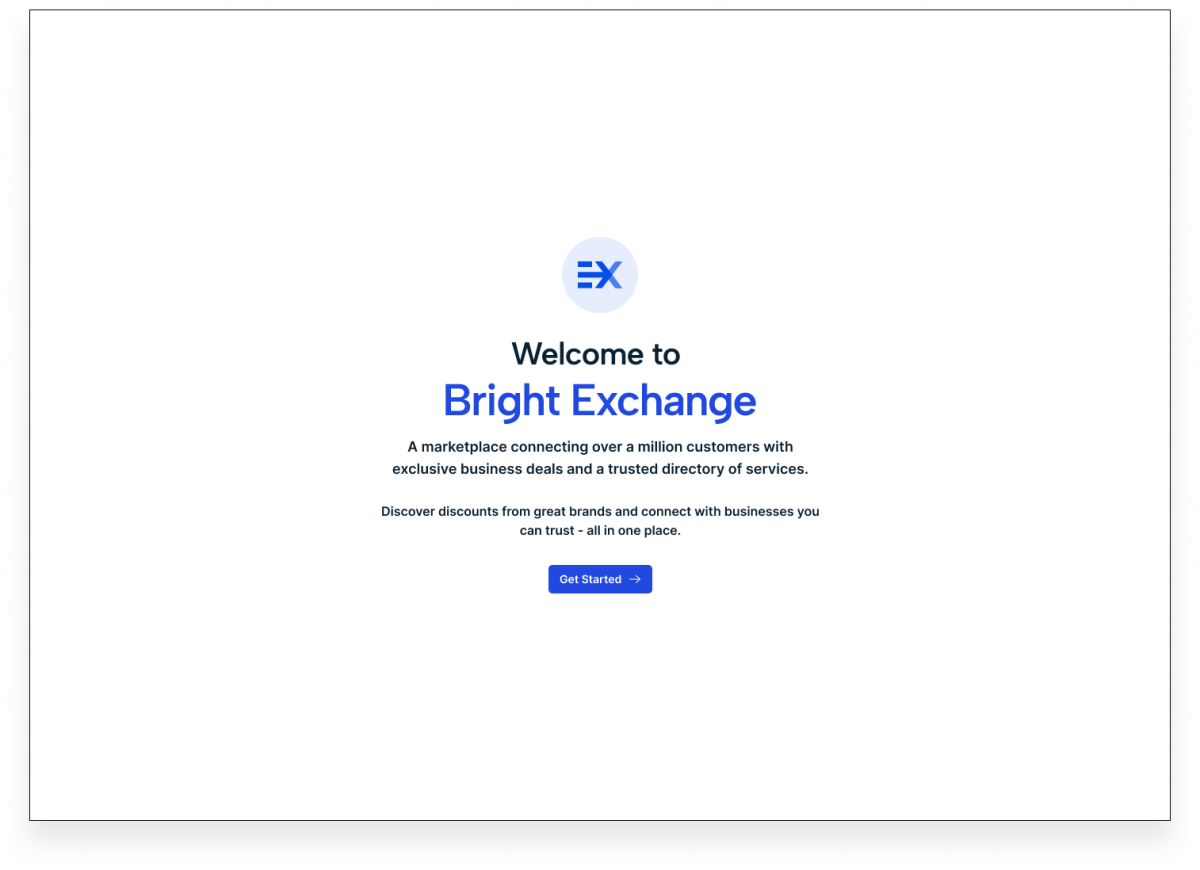
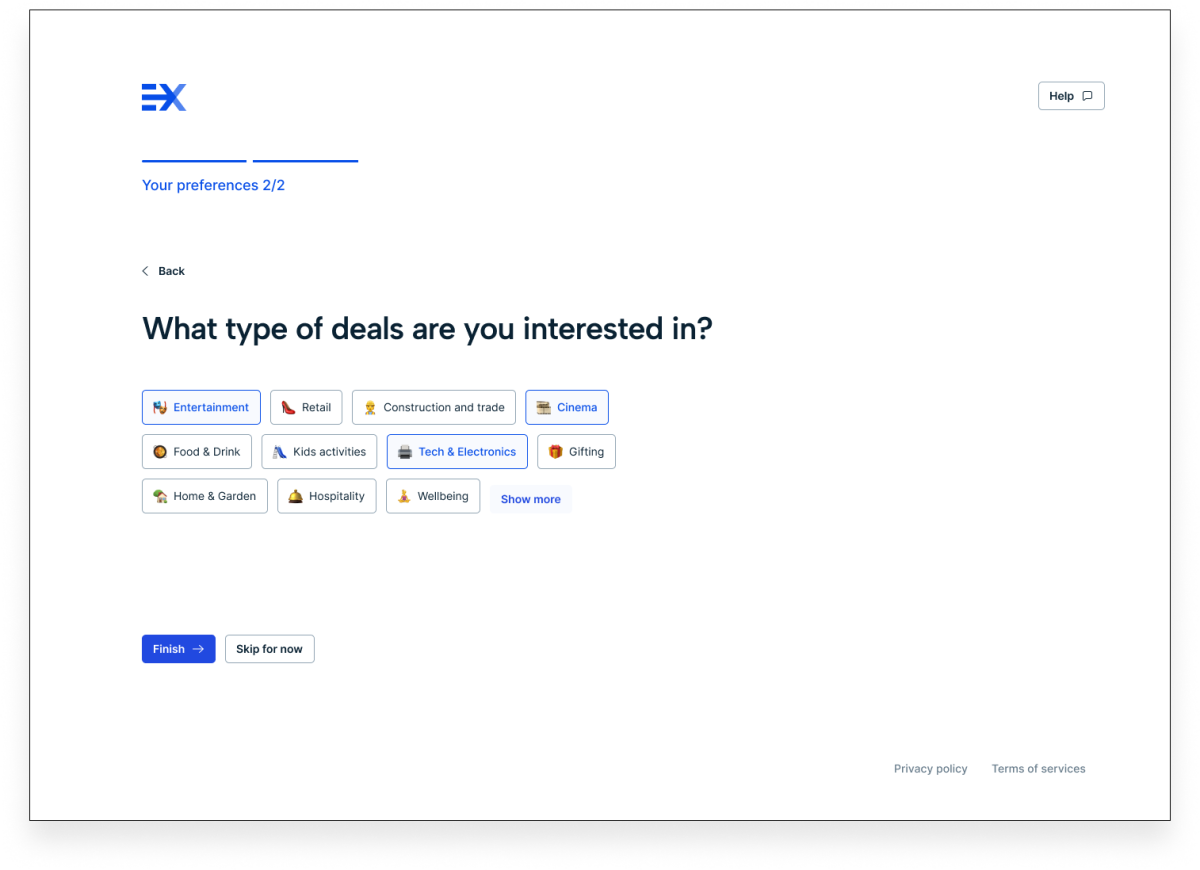
First impressions matter. I designed a lightweight onboarding flow that actually explained what Exchange was, what users could expect, and why it mattered. Promise of value from the first interaction.
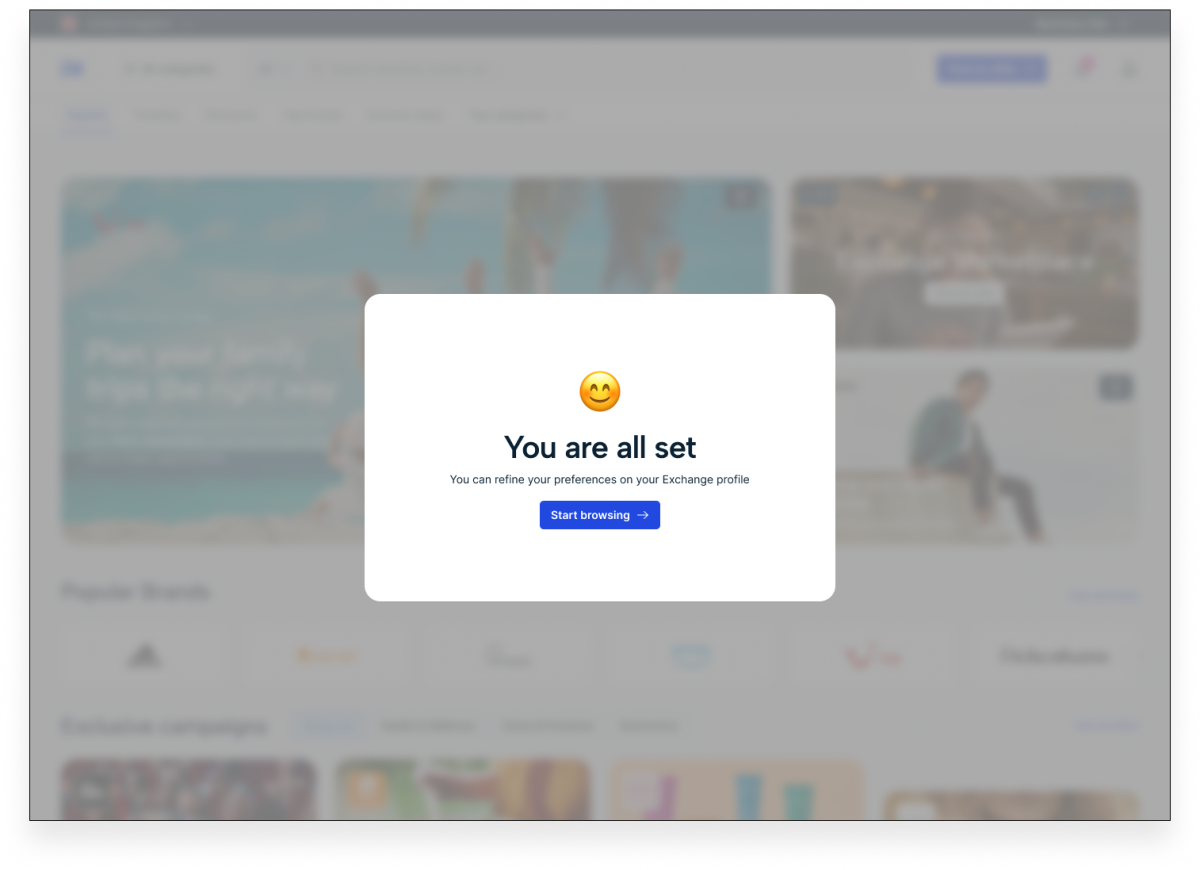
Users shouldn't have to hunt for value. The system should surface it for them.
Preference Capture
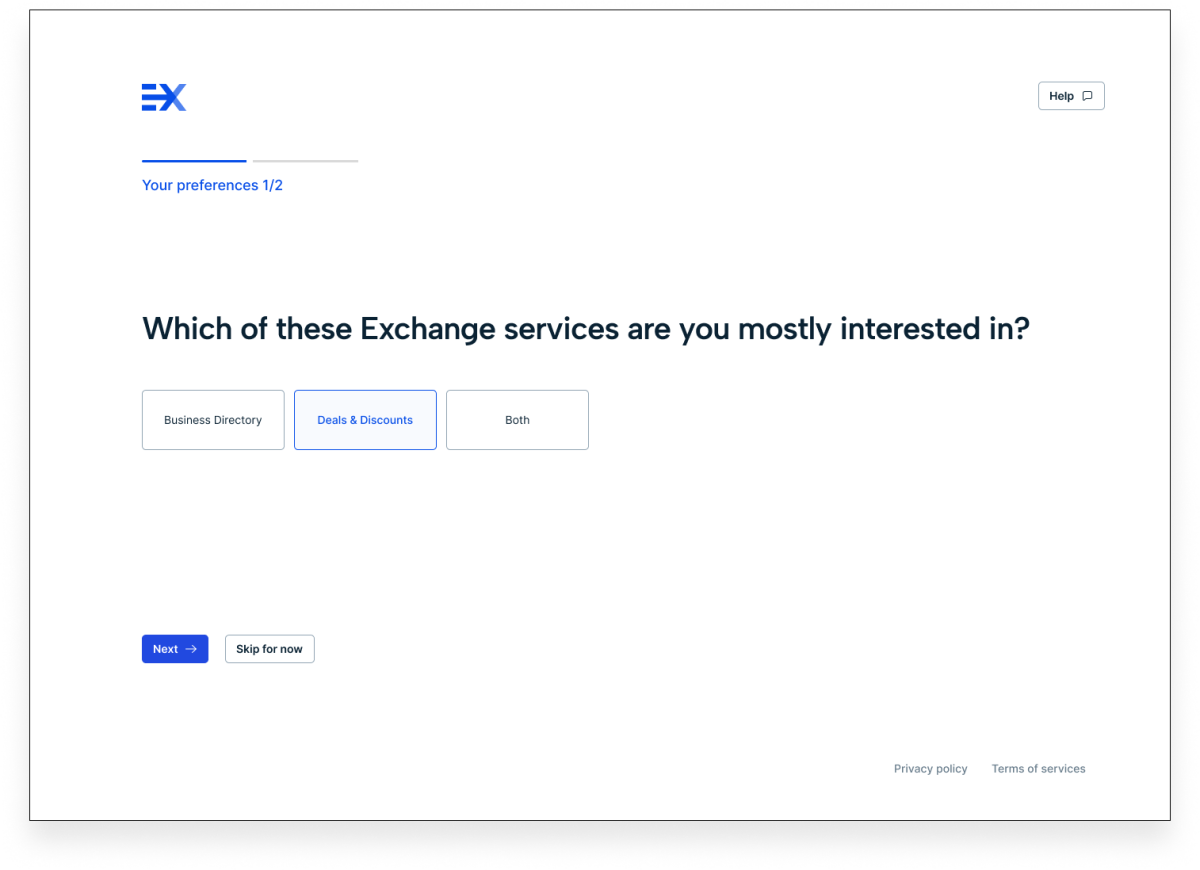
During onboarding, users could now pick their interests from clear categories: Travel & accommodation, Food & drink, Retail & shopping, Technology & software, Health & wellbeing, Local services or Business services
They could also indicate whether they wanted personal perks, business offers, or both.
This single interaction transformed the experience from generic to relevant. Instead of showing everyone everything and hoping something stuck, we could tailor the feed immediately. The system started working for the user, not the other way around.
Updating Preferences
People change. Interests shift. What mattered last month might not matter today. I designed a way for customers to update their interests, reset recommendations, and recalibrate the experience whenever they wanted in the admin area. This addressed relevance drift, built trust, and gave users genuine agency over what they saw.
It also tackled a subtle but real brand risk. Some users felt uncomfortable being "advertised to" inside paid HR software. By giving them explicit control over their feed, I reframed the experience. They weren't being marketed to. They were curating their own perks.
Results
The preference centre launched in the first week of March 2026. The data so far is promising.
Average session duration on the offers page increased from 35 seconds to 58 seconds. Users were no longer scanning and bouncing. Over 68% of active users set preferences, and once they did, repeat behaviour followed. Affiliate partnerships became demonstrably more valuable because offers were reaching people who actually cared about them.
BrightExchange evolved from a passive perks feed into something that actually converted. Users moved from aimless browsing to intentional discovery. Affiliate revenue improved without adding a single new user or partner. And the commercial model finally aligned with the user experience instead of fighting against it.
This mattered most in a commission-based model where Bright only earns at the moment of transaction. Every percentage point improvement in conversion directly impacted profitability. The million-strong customer base was already there. They just needed a reason to act.
Signing off!
Key Takeaways
This project was jam-packed with a lot of work, exploration and discussion with stakeholders. It feels almost impossible to boil down my learning, but if I had to, here they are!
Check your GA tags!!
Never assume your analytics are tracking what you think they are. Ensuring your Google Analytics tags are set up correctly is foundational, otherwise, you’re making decisions on incomplete or misleading data. During this project, the Dataslayer Chrome extension was invaluable: it let me see in real time which events were firing and which weren’t, making it easy to spot gaps and fix them before launch. Always validate your event tracking in the browser, not just in the code.
Design for Relevance, Not Just Reach
Relevance beats volume every time. A thousand generic offers are worth less than ten that actually match what someone needs right now. And in marketplace design, every structural decision has commercial consequences. Visibility. Prioritisation. Feed logic. These aren't just design choices. They're revenue decisions.
This project hammered home a few things I'll carry into every marketplace or platform project from now on.
Most importantly: if finding value requires effort, most people won't bother. The system has to do the heavy lifting. It's not the user's job to dig for gold. It's our job to surface it.